Support our educational content for free when you purchase through links on our site. Learn more
15 Clothing Brands With Upcycled Fashion Lines ♻️


The best clothing brands with upcycled fashion lines turn deadstock, vintage garments, textile scraps, and unwanted denim into pieces you’ll genuinely want to wear. Our top stylist picks include E.L.V. Denim, Psychic Outlaw, Zero Waste Daniel, RE/DONE, Tonlé, and Rave Review, each offering a different take on circular style.
We once styled a patched denim jacket that looked slightly chaotic on the hanger but became the hero of every outfit: white shirt, black trousers, vintage dress, even sneakers and shorts. That is the magic of good upcycling. It does not merely rescue fabric; it creates character that factory-perfect clothing often lacks.
The catch? “Upcycled” does not automatically mean sustainable. You still need to check material sourcing, craftsmanship, labor transparency, care requirements, fit, and whether the garment will survive more than a few photographs. The Ellen MacArthur Foundation’s circular fashion overview explains why keeping products and materials in use matters, while Fashion Revolution emphasizes the value of longer garment use.
Key Takeaways
- Best overall upcycled denim: E.L.V. Denim creates refined jeans from unwanted post-consumer denim.
- Best statement outerwear: Psychic Outlaw turns vintage quilts into colorful, custom jackets.
- Best bold patchwork: Zero Waste Daniel transforms tiny textile scraps into graphic mosaic designs.
- Best reconstructed vintage: RE/DONE, Urban Renewal, Beyond Retro, and Preloved offer wearable remixed garments.
- Best luxury-minded options: Marine Sere, Rave Review, and Collina Strada bring reclaimed materials to high-fashion silhouettes.
- Check the details: A credible brand should explain where materials come from, where garments are made, and how pieces can be cared for or repaired.
- 👉 Shop for wearability: The most sustainable statement piece is one you can style several ways and wear repeatedly.
- Upcycling is not recycling: Upcycling usually redesigns existing materials, while recycling breaks them down into new fibers or feedstock.
- Begin with accessories or denim if you are new to reclaimed fashion; sizing and styling are often easier.
- Avoid greenwashing: Broad claims such as “eco” or “zero waste” need specific evidence.
✅ Explore official collections: E.L.V. Denim | Psychic Outlaw | Zero Waste Daniel | RE/DONE | Marine Sere
Table of Contents
- ⚡️ Quick Tips and Facts About Upcycled Fashion Brands
- 🧵 What Is Upcycled Fashion? Materials, Methods, and Key Terms
- ♻️ Upcycling vs. Recycling, Deadstock, Vintage, and Reworked Clothing
- 🌱 Why Upcycled Apparel Can Reduce Fashion Waste
- 📜 From Patchwork to Circular Fashion: The Rise of Upcycled Clothing Lines
- 🧶 How Designers Turn Textile Waste Into Desirable Garments
- 🔍 How to Spot Authentic Upcycling and Greenwashing
- 🏆 15 Clothing Brands With Upcycled Fashion Lines Worth Knowing
- 1. Tonlé: Zero-Waste Textile Production With Artful Layers
- 2. Heritage ReFashioned: Vintage Fabrics With a Story
- 3. Zero Waste Daniel: Playful Design From Pre-Consumer Scraps
- 4. Preloved: Reworked Garments and Circular Wardrobe Staples
- 5. RE/DONE: Reconstructed Denim and Responsible Vintage Style
- 6. UO Urban Renewal and Vintage: One-of-a-Kind Reclaimed Finds
- 7. Psychic Outlaw: Quilt Jackets and Wearable Textile Art
- 8. JJ Vintage: Upcycled Vintage Pieces With Maximum Personality
- 9. Girl of the Earth: Handmade Reworked Clothing and Accessories
- 10. Marine Sere: Luxury Crescent Motifs and Regenerated Materials
- 11. E.L.V. Denim: Premium Jeans Made From Post-Consumer Denim
- 12. Fanfare Label: Upcycled Denim and Ethical Streetwear
- 13. Rave Review: High-Fashion Patchwork and Reclaimed Textiles
- 14. Collina Strada: Deadstock Fabrics and Reimagined Prints
- 15. Beyond Retro: Reworked Vintage Clothing and Textile Diversion
- 👗 Best Upcycled Fashion Brands by Clothing Category
- 👖 Upcycled Denim, Jeans, and Denim Jackets
- 🧥 Patchwork Coats, Quilted Jackets, and Outerwear
- 👚 Reworked Dresses, Tops, and Everyday Separates
- 👜 Upcycled Bags, Shoes, and Fashion Accessories
- 🛍️ How to Shop for Upcycled Clothing Online and In Person
- 📏 Understanding One-of-a-Kind Sizing and Garment Measurements
- 🧼 Care Instructions for Reworked and Vintage Clothing
- 🚚 Shipping, Returns, Repairs, and Authenticity Questions
- 💸 Are Upcycled Clothes Worth It? Quality, Craftsmanship, and Cost Per Wear
- ✅ Benefits of Buying Upcycled Apparel
- ❌ Potential Drawbacks of Reworked and Upcycled Fashion
- 🧮 How to Compare Upcycled Brands Fairly
- 🌍 Sustainability Claims to Check Before You Buy
- 📊 Materials, Supply Chains, and Production Transparency
- 🏷️ Certifications and Standards That Matter
- 🚩 Red Flags for Greenwashing in Sustainable Fashion
- 🧵 Can You Upcycle Your Own Clothes? Beginner-Friendly Ideas
- ✂️ Easy Ways to Rework Jeans, T-Shirts, and Sweaters
- 🪡 Repair, Visible Mending, and Embellishment Techniques
- 🏡 Finding Local Tailors, Repair Shops, and Clothing Swaps
- 📈 The Business of Upcycled Fashion: Designers, Deadstock, and Circularity
- 🏭 Production Challenges for Small Upcycling Labels
- 🔄 Take-Back Programs, Resale, and Closed-Loop Fashion
- 🔮 What the Future Holds for Reclaimed Textile Design
- 🧭 How to Build a Stylish Circular Wardrobe
- 🧺 Combining Upcycled, Secondhand, and New Responsible Pieces
- 🎨 Styling Statement Pieces Without Looking Costume-Like
- 🗓️ A Practical Buy-Less, Wear-More Wardrobe Plan
- 🏁 Conclusion: The Best Clothing Brands With Upcycled Fashion Lines
- 🔗 Recommended Links for Sustainable and Circular Fashion
- ❓ FAQ About Clothing Brands With Upcycled Fashion Lines
- What is the difference between upcycled and recycled clothing?
- Are upcycled fashion brands sustainable?
- Which brands make the best upcycled denim?
- Why are upcycled clothes often one of a kind?
- How should you wash upcycled and vintage garments?
- How can you tell if a brand is genuinely upcycling materials?
- Can upcycled clothing be returned or altered?
- 📚 Reference Links and Reliable Sustainability Sources
Quick Tips and Facts About Upcycled Fashion Brands
Our Clothing Brands guides begin with a simple rule: the most sustainable garment is usually the one you already own, wear often, and care for well. Upcycled fashion adds a clever second option by transforming existing clothing, fabric scraps, deadstock, industrial materials, or vintage textiles into something with renewed value.
⚡️ The fast answer
Clothing brands with upcycled fashion lines do more than choose recycled fibers. They typically reconstruct, repair, patch, remix, or redesign existing materials instead of starting with newly produced fabric.
| Question | Short answer |
|---|---|
| What is upcycling? | Turning unwanted or surplus materials into a product of equal or greater value. |
| Is upcycling the same as recycling? | ❌ No. Recycling usually breaks materials down; upcycling keeps more of the original material intact. |
| Are all upcycled garments one of a kind? | Not always, but limited materials often make each piece slightly different. |
| Is upcycled clothing automatically sustainable? | ❌ No. Energy use, shipping, durability, labor, and the original material still matter. |
| Which pieces are easiest to find? | Upcycled denim, patchwork jackets, quilt coats, bags, vintage remakes, and deadstock dresses. |
| What should you check first? | Material source, production details, garment quality, care instructions, and return policy. |
✅ Our stylist-approved buying rules
- Buy the garment, not just the slogan. Inspect seams, lining, closures, fabric strength, and comfort.
- Ask where the material came from. “Made with sustainable materials” is much weaker than “constructed from post-consumer denim sourced in the UK.”
- Expect variation. A reworked jacket may have mismatched panels, visible mending, or an unusual hem. That is often the charm, not a defect.
- Check measurements rather than relying on a size label. Vintage sizing can be a mischievous little liar.
- Prioritize wearability. A spectacular coat worn 100 times beats a “perfectly sustainable” garment abandoned in your closet.
- Look for repair and resale options. Take-back schemes can extend a garment’s useful life.
The United Nations Environment Programme describes fashion’s environmental footprint as a major global challenge, while the European Environment Agency emphasizes that longer use and better circular systems are essential. Those points lead to our first important distinction: upcycling is promising, but the label alone is not proof of impact.
What Is Upcycled Fashion? Materials, Methods, and Key Terms
Upcycled fashion is the design and manufacture of clothing or accessories from materials that already exist and might otherwise be discarded, downgraded, or left unused.
That can mean a designer:
- Rebuilds vintage jeans into a new skirt.
- Combines factory offcuts into a patchwork shirt.
- Turns antique quilts into jackets.
- Uses old truck tarpaulins for bags.
- Reworks unsold garments into limited-edition pieces.
- Converts damaged clothing into a new silhouette.
- Adds panels, embroidery, dye, or appliqué to extend a garment’s life.
The NC State Wilson College of Textiles explains that upcycling can involve repurposing, repairing, upgrading, and remanufacturing. The critical idea is that the original material remains recognizable or useful rather than being completely broken down into raw fiber.
♻️ Upcycling vs. Recycling, Deadstock, Vintage, and Reworked Clothing
These terms appear together online, but they are not interchangeable.
| Term | What happens to the material? | Example | Stylist’s verdict |
|---|---|---|---|
| Upcycling | Existing material is redesigned into a higher-value product. | Jeans reconstructed into a jacket. | ✅ Most relevant to this guide |
| Textile recycling | Material is mechanically or chemically processed into fibers or feedstock. | Recycled polyester made from plastic bottles. | Useful, but not the same as upcycling |
| Deadstock | Unused fabric or finished goods left from production. | Surplus cotton rolls made into new dresses. | ✅ Can prevent waste, but ask why it remained unused |
| Vintage | Older clothing sold again, usually with little or no alteration. | A 1970s wool blazer. | ✅ Often excellent for extending garment life |
| Reworked clothing | Existing garments are altered or combined. | Two shirts made into one oversized shirt. | Often overlaps with upcycling |
| Downcycling | Material becomes a lower-value product. | Clothing turned into industrial rags. | Better than landfill, but not the same creative value |
| Repair | Damage is fixed so the original garment can be worn longer. | Replacing a zipper or darning a sweater. | ✅ Frequently the most efficient option |
The Ellen MacArthur Foundation frames circular fashion around keeping products and materials in use. Upcycling fits that model, but repair, resale, rental, and long-term wear count too.
What does “deadstock” actually mean?
Deadstock can refer to:
- Surplus fabric left after a production run.
- Unused rolls from a closed mill.
- Excess garments that never sold.
- Materials with minor defects.
- Vintage or discontinued stock.
Deadstock sounds automatically virtuous, but transparency matters. A brand should explain whether it is using pre-existing inventory ordering newly manufactured “deadstock-style” fabric. The former helps use an existing resource; the latter may simply be clever wording wearing a sustainability hat.
Why are upcycled garments often unique?
Traditional fashion production depends on consistent rolls of fabric. Upcycling depends on whatever is available:
- A limited number of old quilts.
- Inconsistent denim washes.
- Different fabric weights.
- Stains, repairs, or faded areas.
- Iregularly shaped offcuts.
That variability produces the visual language many shoppers love: patchwork, contrast panels, asymmetric hems, visible seams, and unexpected color combinations.
🌱 Why Upcycled Apparel Can Reduce Fashion Waste
Upcycling can help by:
- Diverting usable materials from disposal.
- Reducing demand for virgin textile inputs.
- Preserving some of the energy and labor already invested in the original material.
- Creating higher-value products from low-value scraps.
- Encouraging emotional attachment through uniqueness and storytelling.
- Supporting small-scale repair and sewing skills.
However, environmental performance depends on the full product system. A handmade jacket made from scraps may still involve high-impact shipping, synthetic trims, poor durability, or excessive packaging.
The Textile Exchange Materials Market Report is useful for understanding why material choice matters, while the European Environment Agency’s textile report highlights the importance of durability and longer use phases.
Our practical takeaway: Upcycling is strongest when it combines reclaimed materials with durable construction, responsible labor, low-waste production, and many years of wear.
From Patchwork to Circular Fashion: The Rise of Upcycled Clothing Lines
Upcycled fashion is not a new invention. People have patched, repaired, altered, and repurposed clothing for centuries. What has changed is the scale of textile production and the growing visibility of designers who treat waste as a design resource.
🧶 How Designers Turn Textile Waste Into Desirable Garments
A typical upcycling process looks like this:
Step 1: Source suitable materials
Designers may collect:
- Factory offcuts.
- Damaged inventory.
- Vintage garments.
- Household textiles.
- Quilts and blankets.
- Deadstock fabric.
- Used uniforms.
- Industrial waste such as truck tarps or airbags.
Step 2: Sort and assess
Materials are inspected for:
- Fiber content.
- Colorfastness.
- Odor or contamination.
- Tears and weak points.
- Stretch and recovery.
- Washability.
- Compatibility with other fabrics.
Step 3: Deconstruct
The original garment may be:
- Unpicked at the seams.
- Cut into panels.
- Washed and sanitized.
- Sorted by color.
- Combined with other garments.
- Preserved in its original form.
Step 4: Develop a new pattern
This is where upcycling differs from ordinary mass production. The pattern must adapt to the available material. Instead of asking, “How much fabric do we need?” the designer often asks, “What can this material become?”
Step 5: Construct and reinforce
High-quality upcycled garments need careful reinforcement around:
- Pockets.
- Armholes.
- Waistbands.
- Zippers.
- Shoulder seams.
- Areas where different fabric weights meet.
Step 6: Inspect, photograph, and explain
Because pieces may vary, responsible brands should communicate:
- Measurements.
- Material origins.
- Care instructions.
- Construction details.
- Imperfections.
- Repair or return policies.
🔍 How to Spot Authentic Upcycling and Greenwashing
The Federal Trade Commission’s Green Guides advise marketers to avoid broad, unsupported environmental claims. That is excellent advice for clothing shoppers too.
Strong signals ✅
- The brand names the source of its reclaimed materials.
- Product pages explain the transformation process.
- The company identifies manufacturing locations.
- The collection is genuinely limited because of material availability.
- The brand discusses flaws and variation honestly.
- There is evidence of repair, resale, or take-back.
- Environmental claims are specific and measurable.
Weak signals ❌
- “Eco” appears repeatedly without evidence.
- A garment is described as upcycled solely because it uses a recycled fiber.
- The brand provides no information about production.
- “Zero waste” is used without explaining what happens to scraps.
- A huge permanent collection is marketed as one-of-a-kind.
- The environmental claim focuses on packaging while ignoring the garment itself.
🎥 What the featured video adds to the conversation
The featured video presents a useful range of approaches, from Yvonne & Mitchel’s 100% upcycled clothing and second-hand shipping materials to Siam Circle’s reconstructed vintage garments, Psychic Outlaw’s custom quilt jackets, RE/DONE’s denim model, and Justin Mensinger’s streetwear made from discarded fabrics.
It also highlights Veja’s recycled B-mesh sneakers and recommends Good On You for checking brand ratings across people, planet, and animals. We like the video’s enthusiasm, but we would add one caution: a recycled material is not automatically an upcycled material, and a rating platform is a useful starting point rather than a final verdict.
15 Clothing Brands With Upcycled Fashion Lines Worth Knowing
The brands below represent different interpretations of upcycled fashion. Some build their entire identity around reclaimed materials; others offer limited collections, reconstructed vintage, or circular accessories.
Rating guide
Scores are editorial assessments based on:
- Design: visual appeal and styling flexibility.
- Material use: clarity and creativity of reclaimed inputs.
- Craftsmanship: construction and finish.
- Functionality: comfort, versatility, and practical wear.
- Transparency: available information about sourcing and production.
- Circularity: repair, resale, take-back, or waste-reduction systems.
These ratings are not laboratory impact scores. A beautiful upcycled garment can still have shortcomings, and a less flashy design may be more useful in daily life.
| Brand | Design | Materials | Craftsmanship | Functionality | Transparency | Circularity | Overall |
|---|---|---|---|---|---|---|---|
| Tonlé | 8 | 10 | 8 | 8 | 9 | 9 | 8.7 |
| Heritage ReFashioned | 9 | 9 | 9 | 8 | 8 | 7 | 8.3 |
| Zero Waste Daniel | 9 | 10 | 8 | 7 | 9 | 9 | 8.7 |
| Preloved | 8 | 9 | 8 | 8 | 8 | 8 | 8.2 |
| RE/DONE | 9 | 8 | 8 | 8 | 7 | 7 | 7.8 |
| Urban Renewal/Vintage | 8 | 8 | 7 | 8 | 6 | 6 | 7.2 |
| Psychic Outlaw | 10 | 9 | 9 | 8 | 8 | 8 | 8.7 |
| JJ Vintage | 8 | 8 | 8 | 8 | 7 | 7 | 7.7 |
| Girl of the Earth | 9 | 9 | 8 | 8 | 8 | 7 | 8.2 |
| Marine Sere | 9 | 8 | 9 | 8 | 7 | 7 | 8.0 |
| E.L.V. Denim | 8 | 10 | 9 | 9 | 9 | 9 | 8.8 |
| Fanfare Label | 8 | 9 | 8 | 8 | 8 | 8 | 8.2 |
| Rave Review | 10 | 9 | 9 | 7 | 8 | 7 | 8.3 |
| Collina Strada | 9 | 8 | 8 | 7 | 7 | 7 | 7.7 |
| Beyond Retro | 8 | 8 | 7 | 8 | 7 | 7 | 7.5 |
Availability changes quickly. Upcycled drops sell out, brands evolve, and some older labels close. Tonlé, for example, is frequently cited as a zero-waste pioneer but is no longer operating as an active label. We include it for historical importance, not as a current shopping recommendation.
1. Tonlé: Zero-Waste Textile Production With Artful Layers
Tonlé became known for rescuing leftover fabric from Cambodian garment factories and turning it into clothing, yarn, and paper goods. The brand’s reported system used larger fabric pieces for garments, smaller scraps for yarn, and remaining waste in handmade paper.
That layered approach is impressive because it attempts to address multiple sizes of textile waste, rather than using only the most attractive remnants.
Why stylists admired Tonlé
- Artistic draping and layered silhouettes.
- Strong zero-waste identity.
- Visible connection between material and final garment.
- Ethical production model in Cambodia.
- Circular resale through its former Open Closet program.
The competing Zannie feature called the process “very impressive,” particularly because production was organized more like a “sewing circle rather than an assembly line.” That description captures the brand’s small-scale, hands-on character.
The limitation
Tonlé’s current availability is the key issue. Shoppers may find secondhand garments, but should verify condition, measurements, and authenticity. For current alternatives, look at active labels such as E.L.V. Denim, Freitag, or RE;CODE.
2. Heritage ReFashioned: Vintage Fabrics With a Story
Heritage ReFashioned creates accessories from vintage textiles sourced across China, Japan, and Southeast Asia. Japanese kimono silk and other heritage materials become handbags and clutches in limited quantities.
Standout design details
- Kimono silk and other historic textiles.
- Handmade production in Hong Kong.
- Limited runs dictated by available material.
- Detachable straps on selected designs.
- Product storytelling about textile origins and symbolism.
The appeal is less “look, I found an old curtain” and more museum-quality textile turned into a usable accessory. A kimono silk kisslock clutch can add texture to a plain navy dress, tailored trousers, or an evening jumpsuit without shouting for attention.
Best for
- Occasion dressing.
- Gift buying.
- Textile collectors.
- Shoppers who value cultural history and small-batch craftsmanship.
Potential drawback
Historic textiles require care. Silk can be delicate, and a beautiful accessory may not be suited to heavy daily use. Check cleaning instructions before carrying it to a picnic involving red wine. We speak from experience.
3. Zero Waste Daniel: Playful Design From Pre-Consumer Scraps
Zero Waste Daniel was founded by Daniel Silverstein after he saw how much usable fabric the fashion industry discarded. His Brooklyn-based studio uses scraps from other designers and applies a signature ReRoll technique to create colorful mosaic-like surfaces.
What makes it distinctive
- Bold, graphic patchwork.
- Strong use of small scraps.
- Custom mosaic options.
- Buy-back program for eligible pieces.
- A recognizable visual identity.
The brand demonstrates that waste reduction does not have to look beige, worthy, or apologetic. The pieces are often exuberant, which makes them excellent for clients who want a conversation starter.
Styling advice
Balance a Zero Waste Daniel statement piece with quiet basics:
- Mosaic top + straight-leg black trousers.
- Reworked accessory + monochrome suit.
- Colorful jacket + white T-shirt and relaxed denim.
- Graphic patchwork skirt + simple knitwear.
Trade-off
High-art surfaces can be less versatile than a plain garment. Before buying, identify at least three outfits you can create. If you cannot, the piece may become closet art rather than clothing.
4. Preloved: Reworked Garments and Circular Wardrobe Staples
Preloved is a Toronto-based label with a long history of working with vintage and deadstock materials. The company has also offered custom upcycling, allowing customers to submit an existing garment for transformation.
Strengths
- More than two decades of upcycling experience.
- In-house design and production.
- Vintage and deadstock material use.
- Custom transformation services.
- Everyday clothing rather than only runway-style pieces.
Why it matters
A custom service can solve a real wardrobe problem. Perhaps a parent’s oversized shirt has sentimental value but an unwearable shape. Reworking it into a skirt, vest, or child’s garment can preserve the emotional connection while restoring practical use.
Best for
- Wearable everyday separates.
- Sentimental garments.
- Shoppers who prefer softer, less theatrical upcycling.
- People seeking Canadian design and production.
5. RE/DONE: Reconstructed Denim and Responsible Vintage Style
RE/DONE became well known for reconstructing vintage Levi’s denim and collaborating with brands including Levi’s. The label’s broader offering has included reworked denim, vintage-inspired staples, and resale-oriented initiatives.
What to examine
- Denim provenance.
- Whether a piece is genuinely reconstructed or newly made.
- Fit after alteration.
- Reinforced seams and pocket placement.
- Return conditions for one-off garments.
RE/DONE’s appeal comes from familiar silhouettes made more individual through reconstruction. A pair of jeans may retain the character of vintage denim while receiving a modern rise, leg, or finish.
Styling note
Upcycled denim already carries visual information: fading, repairs, contrast stitching, and different washes. Keep the rest of the outfit clean:
- Reconstructed jeans + crisp shirt.
- Upcycled denim jacket + slip dress.
- Vintage denim skirt + polished loafers.
- Patchwork jeans + tonal knitwear.
Perspective from the featured video
The featured video highlights RE/DONE’s water-conscious processes and resell concept. That is encouraging, but shoppers should still check current product-level information because brand-wide claims and individual items can differ.
6. UO Urban Renewal and Vintage: One-of-a-Kind Reclaimed Finds
Urban Outfiters Urban Renewal combines vintage garments, reworked clothing, and reconstructed pieces within a large retail environment.
Advantages
- Easier access for shoppers who do not live near independent vintage stores.
- Broad range of garments and accessories.
- Regular exposure to reworked silhouettes.
- Useful entry point for younger shoppers exploring vintage.
Watch-outs
- Product descriptions can vary by item.
- “Vintage,” “recycled,” and “remade” may describe different processes.
- Sizing and quality are inconsistent.
- Large-scale retail distribution can complicate the idea of small-batch craft.
Our advice: treat every item individually. Read the material composition, measurements, country of origin, and care instructions. A reworked item can be a good buy, but the label name alone does not guarantee the same construction standard across every product.
7. Psychic Outlaw: Quilt Jackets and Wearable Textile Art
Psychic Outlaw is an Austin-based brand recognized for cheerful handmade pieces from vintage and antique textiles, particularly quilt jackets and bandana dresses.
Signature offerings
- Custom quilt jackets.
- Bandana dresses.
- Vintage textile remakes.
- Customer-suplied quilts.
- Curated materials sourced by the brand.
The biggest emotional advantage is participation. You can provide a family quilt, inherited textile, or meaningful fabric and turn it into something wearable.
How to style a quilt jacket without looking like a walking bedspread
- Pair it with a sleek column of black.
- Add modern denim and simple sneakers.
- Choose one accent color from the quilt and repeat it subtly.
- Avoid competing prints.
- Use a structured bag to add polish.
Practical concerns
- Quilts can be warm and bulky.
- Older fabric may be fragile.
- Custom work requires careful discussion of measurements and expectations.
- Cleaning may involve specialist care.
8. JJ Vintage: Upcycled Vintage Pieces With Maximum Personality
JJ Vintage has been associated with reconstructed activewear made from knitwear and T-shirt scraps. Each piece is handmade and typically one of a kind.
Why it stands out
- Sporty silhouettes.
- Bright, energetic color combinations.
- Distinctive patchwork.
- Handcrafted individuality.
- Strong appeal for festival, dance, and statement styling.
Functionality questions to ask
- Does the fabric have enough stretch?
- Are seams flat and comfortable?
- Is the waistband secure?
- Can the garment handle repeated washing?
- Does the lining provide coverage?
- Are the fibers compatible in care requirements?
Activewear demands more than visual charm. If a garment is intended for movement, test it with a squat, reach, and seated position before removing tags.
9. Girl of the Earth: Handmade Reworked Clothing and Accessories
Girl of the Earth creates women’s clothing and accessories from vintage fabric, often drawing on 1960s and 1970s silhouettes. Limited production can result in only a few pieces per design.
Design character
- Femine vintage references.
- Retro prints.
- Soft, wearable silhouettes.
- Limited-run production.
- New York City craftsmanship.
This is a strong choice for shoppers who want upcycling that feels romantic rather than overtly patchworked. The garments can work beautifully with modern accessories:
- Vintage-inspired dress + contemporary boots.
- Printed skirt + oversized blazer.
- Reworked blouse + straight-leg trousers.
- Retro accessory + minimalist knitwear.
Potential drawback
Vintage fabrics can differ in strength and colorfastness. Ask about washing and inspect high-stress seams before wearing frequently.
10. Marine Sere: Luxury Crescent Motifs and Regenerated Materials
Marine Sere has become associated with regenerated materials, crescent-moon branding, and hybrid garments that combine different textile sources.
What attracts luxury shoppers
- Strong, instantly recognizable design language.
- Sportswear blended with couture references.
- Reworked scarves, jerseys, lace, and vintage materials.
- Dramatic styling potential.
- High-fashion construction.
Marine Sere illustrates a different model from a small quilting studio. Upcycling becomes part of a luxury design vocabulary, often through hybridization: combining disparate garments or textiles into a new, polished object.
Considerations
- Verify product descriptions carefully.
- Distinguish regenerated, recycled, deadstock, and vintage components.
- Check care requirements for mixed materials.
- Think about cost per wear rather than novelty.
11. E.L.V. Denim: Premium Jeans Made From Post-Consumer Denim
E.L.V. Denim is a UK label specializing in jeans made from unwanted post-consumer denim. The brand’s work is frequently cited as an example of textile waste being transformed into premium product.
Why denim is suitable for upcycling
- It is durable.
- It has recognizable structure.
- Different washes create natural contrast.
- Panels can be re-cut into new silhouettes.
- Existing wear marks add character.
What makes a good upcycled denim piece?
| Detail | What to look for |
|---|---|
| Seams | Even stitching and reinforced stress points |
| Waistband | Stable, comfortable, and properly shaped |
| Rise | Measured from crotch seam to waistband |
| Fabric | No hidden thinning near pockets or knees |
| Panels | Intentional placement rather than accidental bunching |
| Hardware | Secure buttons, rivets, and zippers |
| Care | Clear laundering and drying instructions |
E.L.V. Denim is especially appealing if you want upcycling with a refined, wardrobe-friendly finish rather than a visibly crafty look.
12. Fanfare Label: Upcycled Denim and Ethical Streetwear
Fanfare Label combines upcycled materials with ethical production and contemporary streetwear. Denim, surplus fabric, and reconstructed garments are used in pieces designed to feel current rather than costume-like.
Best features
- Youthful silhouettes.
- Denim reconstruction.
- Visible design details.
- Ethical production focus.
- Strong fit for casual wardrobes.
Styling approach
Use one directional piece with familiar basics:
- Reworked denim shirt + cargo trousers.
- Patchwork jacket + plain jersey dress.
- Upcycled jeans + tailored wool coat.
- Remixed overshirt + white tee and loafers.
This is where our Clothing Brand Quality Comparisons can help: compare fabric strength, seam quality, fit, and care, not only brand mood.
13. Rave Review: High-Fashion Patchwork and Reclaimed Textiles
Rave Review is known for dramatic patchwork, vintage materials, and fashion-forward reconstructed garments.
Design strengths
- High-impact patchwork.
- Strong silhouettes.
- Clever use of scarves and vintage textiles.
- Runway-level visual storytelling.
- Excellent editorial presence.
Who should buy it?
- Confident dressers.
- Collectors.
- Shoppers seeking fashion investment pieces.
- Anyone bored by beige minimalism.
Who may want to pause?
- People wanting easy-care basics.
- Shoppers who need consistent sizing.
- Anyone uncomfortable with visible irregularity.
A Rave Review piece can become the “main character” of an outfit. Let it. Pair with simple shoes, restrained jewelry, and a clean beauty look.
14. Collina Strada: Deadstock Fabrics and Reimagined Prints
Collina Strada has integrated deadstock fabrics, responsible materials, and expressive design into its collections.
The appeal
- Bold prints.
- Playful proportions.
- Youthful energy.
- High-fashion experimentation.
- Reclaimed or surplus material storytelling.
Collina Strada is useful for showing that sustainability and fashion risk-taking are not enemies. The brand’s approach is less about making waste invisible and more about transforming it into joyful visual excess.
Buying advice
Because expressive pieces can dominate an outfit, consider:
- Layering potential.
- Seasonality.
- Comfort.
- Fabric care.
- Whether the print works with your existing shoes and outerwear.
15. Beyond Retro: Reworked Vintage Clothing and Textile Diversion
Beyond Retro is primarily known for vintage clothing, with reworked and upcycled collections that turn existing garments into new designs.
Strengths
- Large vintage selection.
- Accessible entry point to circular dressing.
- Reworked garments with contemporary styling.
- Strong variety in prints, denim, knitwear, and outerwear.
How it differs from a dedicated upcycling studio
A vintage retailer may sell mostly original secondhand garments, while a reworked collection involves alteration or reconstruction. Read the product description carefully to understand which you are buying.
Our styling trick
Start with one vintage statement item, then add modern fit:
- 1980s blazer + contemporary straight jeans.
- Reworked shirt + minimalist slip skirt.
- Vintage knit + tailored trousers.
- Retro dress + modern leather belt.
Best Upcycled Fashion Brands by Clothing Category
Not every upcycled label serves the same wardrobe need. Some excel at denim; others make accessories, outerwear, or statement pieces.
| Category | Strong brands to explore | Best for |
|---|---|---|
| Upcycled denim | E.L.V. Denim, RE/DONE, Fanfare Label | Jeans, jackets, skirts |
| Quilt jackets | Psychic Outlaw, Rave Review | Statement outerwear |
| Luxury accessories | Heritage ReFashioned, Marine Sere | Occasion and collectible pieces |
| Colorful patchwork | Zero Waste Daniel, Collina Strada | Expressive styling |
| Vintage everyday wear | Beyond Retro, Urban Renewal, Preloved | Accessible wardrobe building |
| Reconstructed womenswear | Girl of the Earth, Rave Review | Dresses, skirts, blouses |
| Circular bags | Freitag, Heritage ReFashioned, RE;CODE | Durable accessories |
| Technical reclaimed materials | RE;CODE, Ecoalf | Outerwear and utility pieces |
👖 Upcycled Denim, Jeans, and Denim Jackets
Denim is one of the easiest categories for shoppers because it is durable, familiar, and stylistically flexible.
What to inspect
- Thinning around knees and seat.
- Stretch recovery.
- Waistband stability.
- Crotch reinforcement.
- Uneven hems.
- Pocket placement.
- Shrinkage risk.
Styling formulas
- Casual polish: reconstructed jeans + cotton shirt + loafers.
- Weekend uniform: patchwork jacket + white tee + wide-leg trousers.
- Femine contrast: denim overshirt + floral dress.
- Modern utility: reworked jeans + technical sneakers + structured bag.
🧥 Patchwork Coats, Quilted Jackets, and Outerwear
Outerwear makes upcycling visually obvious and functionally useful.
Look for:
- Smooth lining.
- Secure closures.
- Enough shoulder mobility.
- Reinforced seam intersections.
- Balanced weight distribution.
- Weather suitability.
- Practical pockets.
A quilt jacket can be warm but is not necessarily waterproof. An old blanket may provide insulation without providing rain protection. Read the specifications, not the romantic product story alone.
👚 Reworked Dresses, Tops, and Everyday Separates
For daily wear, prioritize:
- Comfortable necklines.
- Secure armholes.
- Consistent fabric stretch.
- Washable construction.
- Underwear compatibility.
- A silhouette that works with existing layers.
A reworked shirt that only works with one particular bra and one particular pair of trousers is not a wardrobe hero. It is a high-maintenance houseplant.
👜 Upcycled Bags, Shoes, and Fashion Accessories
Accessories are often an easy entry point because:
- Sizing is less complicated.
- Materials can be showcased in smaller areas.
- They add personality to basic outfits.
- A bag can receive heavy use if well constructed.
For bags, inspect:
- Strap attachment.
- Bottom corners.
- Lining.
- Closure.
- Interior pockets.
- Load capacity.
- Water resistance.
For shoes, check whether “upcycled” applies to the entire shoe or only selected components.
How to Shop for Upcycled Clothing Online and In Person
Shopping for upcycled fashion rewards curiosity. Product descriptions can be poetic, but your body, lifestyle, and laundry routine need practical answers.
📏 Understanding One-of-a-Kind Sizing and Garment Measurements
Never assume your usual size will fit. Measure a garment you already own and love.
Step-by-step measurement method
- Lay the garment flat.
- Smooth, but do not stretch, the fabric.
- Measure pit to pit across the chest.
- Double that number for approximate bust or chest circumference.
- Measure shoulder seam to shoulder seam.
- Measure sleeve length from shoulder seam to cuff.
- Measure total length from the highest shoulder point to hem.
- For trousers, measure waist, rise, inseam, and thigh.
- Compare with the seller’s measurements.
- Allow for fabric stretch and intended ease.
Fit vocabulary
| Term | Meaning |
|---|---|
| Body measurement | Your actual body circumference or length |
| Garment measurement | The finished item’s dimensions |
| Ease | Extra room built into a garment |
| Negative ease | Garment is smaller than the body measurement, usually for stretch fabric |
| Drop shoulder | Shoulder seam sits lower than the natural shoulder |
| One size | A marketing term, not a guarantee of universal fit |
🧼 Care Instructions for Reworked and Vintage Clothing
Mixed materials complicate laundry. Follow the brand’s instructions, but these general rules help:
- Wash less frequently when appropriate.
- Air garments between wears.
- Use cold water unless the care label says otherwise.
- Avoid high heat for vintage textiles and elastic.
- Store delicate pieces away from direct sunlight.
- Support heavy jackets on broad hangers.
- Fold knitwear rather than hanging it.
- Repair loose threads early.
- Test stain treatments on an inconspicuous area.
The American Cleaning Institute provides general fabric-care guidance, while brand-specific labels should take priority.
🚚 Shipping, Returns, Repairs, and Authenticity Questions
Before purchasing, ask:
- Is the item final sale?
- Are returns accepted on custom pieces?
- Who pays return shipping?
- Are measurements guaranteed?
- Does the brand offer repairs?
- Are minor irregularities considered normal?
- Is the item vintage, reconstructed, or newly made?
- What happens if the item arrives with undisclosed damage?
For one-of-a-kind garments, a clear return policy is especially valuable. A beautiful jacket that does not fit should not become an expensive wardrobe sculpture.
Are Upcycled Clothes Worth It? Quality, Craftsmanship, and Cost Per Wear
The answer depends on how often you will wear the item, how well it is made, and how clearly the brand explains its process.
✅ Benefits of Buying Upcycled Apparel
- Lower demand for virgin materials.
- Unique design.
- Potentialy excellent craftsmanship.
- Preservation of vintage textiles and cultural techniques.
- Support for small studios and repair economies.
- A stronger emotional connection to clothing.
- Oportunities for custom and sentimental reworking.
- Reduced dependence on standardized mass production.
The Fashion Revolution regularly emphasizes the importance of extending clothing use and questioning overproduction. Upcycled fashion makes that idea tangible: the old material remains part of the story.
❌ Potential Drawbacks of Reworked and Upcycled Fashion
- Inconsistent sizing.
- Limited availability.
- More complex care.
- Visible imperfections.
- Mixed-fiber recycling challenges.
- Potentialy higher labor input.
- Difficult repairs if fabrics are fragile.
- Limited returns.
- Environmental claims that may be vague.
🧮 How to Compare Upcycled Brands Fairly
Use this scorecard before buying:
| Question | Why it matters |
|---|---|
| Will I wear it at least 30 times? | Use matters more than novelty |
| Can I create three outfits? | Improves wardrobe versatility |
| Is the material source clear? | Helps verify the upcycling claim |
| Are seams reinforced? | Indicates durability |
| Can it be repaired? | Extends useful life |
| Is care realistic for me? | Avoids closet abandonment |
| Does the fit work now? | “I’ll alter it later” is often wishful thinking |
| Is the return policy clear? | Protects against one-off sizing surprises |
A stylist’s cost-per-wear example
Imagine a dramatic reconstructed jacket. If it works with jeans, trousers, skirts, and dresses and you wear it 80 times, its value improves with each outing. If you buy it only for one social-media photograph, its sustainability story weakens considerably.
Sustainability Claims to Check Before You Buy
“Upcycled” is a useful descriptor, but it should be supported by specifics.
📊 Materials, Supply Chains, and Production Transparency
Look for information about:
- Material source.
- Country of manufacture.
- Labor conditions.
- Waste handling.
- Dyeing and finishing.
- Packaging.
- Transport.
- Product durability.
- Repair and resale.
- Fiber content.
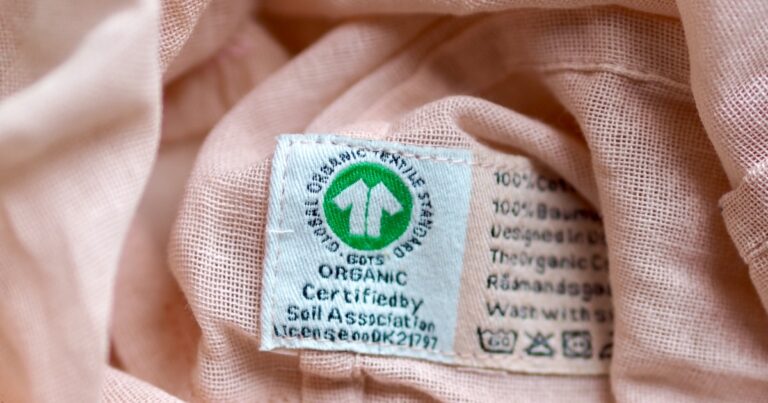
The Global Organic Textile Standard and Textile Exchange offer helpful background on material standards, although not every upcycled garment will carry a certification.
🏷️ Certifications and Standards That Matter
Relevant standards may include:
- GOTS: organic fibers and environmental and social processing criteria.
- Global Recycled Standard: recycled-content verification and chain-of-custody requirements.
- OEKO-TEX Standard 100: testing for harmful substances.
- Fair Trade certification: social and labor standards for qualifying products.
- B Corp certification: broader company-level social and environmental assessment.
No single certification proves that a garment is the best choice. A vintage wool coat may have no certification yet avoid new fiber production entirely. Conversely, a certified recycled-fiber garment may be more durable and practical than a poorly made upcycled piece.
🚩 Red Flags for Greenwashing in Sustainable Fashion
Be cautious when:
- “Eco-friendly” is the only environmental detail.
- The brand uses a leaf logo instead of evidence.
- A small reclaimed trim is used to market the entire garment as upcycled.
- The company never identifies production locations.
- Product pages contradict one another.
- The item is described as zero waste but no scrap strategy is given.
- The brand creates urgency around “limited waste” while restocking indefinitely.
- The company does not explain what happens at end of life.
The Competition and Markets Authority Green Claims Code and FTC guidance both support the same principle: environmental claims should be clear, specific, and verifiable.
Can You Upcycle Your Own Clothes? Beginner-Friendly Ideas
Absolutely. You do not need a fashion degree, a vintage sewing machine, or the patience of a saint. Start with a garment that is low-risk and emotionally unimportant.
✂️ Easy Ways to Rework Jeans, T-Shirts, and Sweaters
Beginner project table
| Project | Difficulty | Useful materials | Result |
|---|---|---|---|
| Crop an oversized shirt | Easy | Shirt, fabric scissors, seam finish | Modern top |
| Add elbow patches | Easy | Scrap fabric, needle, thread | Extended sweater life |
| Convert jeans into a skirt | Moderate | Jeans, seam riper, machine or hand sewing | Denim skirt |
| Patch a jacket | Easy | Scraps, iron-on backing, thread | Personalized outerwear |
| Make a tote from trousers | Moderate | Old trousers, lining optional | Reusable bag |
| Combine two shirts | Moderate | Two shirts, sewing tools | Reconstructed top |
| Visible-mend knitwear | Moderate | Contrasting yarn, darning needle | Decorative repair |
The safest sequence
- Wash the garment.
- Inspect for weak fabric.
- Sketch the change.
- Pin before cutting.
- Try it on with temporary tacking.
- Cut conservatively.
- Finish raw edges.
- Wash again if needed.
- Reinforce stress points.
- Wear-test before embellishing further.
🪡 Repair, Visible Mending, and Embellishment Techniques
Useful techniques include:
- Darning.
- Sashiko-inspired stitching.
- Apliqué.
- Patch pockets.
- Embroidery.
- Fabric painting.
- Replacing buttons.
- Adding gusets.
- Reinforcing elbows and knees.
- Replacing elastic.
If a repair affects a structural seam, use a tailor. A crooked decorative patch is charming; a crooked crotch seam is an entirely different adventure.
🏡 Finding Local Tailors, Repair Shops, and Clothing Swaps
Search for:
- Alteration studios.
- Textile repair cafés.
- Community sewing rooms.
- Maker spaces.
- Clothing swaps.
- Vintage repair specialists.
- Shoe and bag repair workshops.
Local repair supports practical circularity without the shipping footprint of sending a garment across the country. It can also improve fit, which is one of the simplest ways to wear something more often.
The Business of Upcycled Fashion: Designers, Deadstock, and Circularity
Upcycling challenges the assumptions behind conventional apparel production.
🏭 Production Challenges for Small Upcycling Labels
Small brands often face:
- Iregular material supply.
- Difficult forecasting.
- Labor-intensive deconstruction.
- Inconsistent sizing.
- Complex pattern cutting.
- Higher quality-control demands.
- Limited ability to restock bestsellers.
- More complicated product photography.
- Difficulty achieving economies of scale.
The NC State textile researchers note that variation in waste materials makes upcycled fashion difficult to produce at mass scale. That limitation explains why many upcycled collections are small-batch and why a favorite item may disappear quickly.
🔄 Take-Back Programs, Resale, and Closed-Loop Fashion
Circular systems can include:
- Brand buy-back programs.
- Customer trade-in credits.
- Repair services.
- Resale marketplaces.
- Refurbishment.
- Rental.
- Fiber recycling.
- Donation partnerships.
- Design for disassembly.
Examples include former Tonlé resale initiatives, Zero Waste Daniel’s buy-back approach, and RE/DONE’s resale-oriented model. Always check whether a program is currently active; circularity pages can remain online after a program changes.
🔮 What the Future Holds for Reclaimed Textile Design
The most promising developments combine:
- Digital product passports.
- Automated textile sorting.
- Better fiber identification.
- Design for disassembly.
- Localized repair.
- Made-to-order production.
- Improved recycled-fiber technology.
- Material marketplaces for deadstock.
- More accurate impact measurement.
But technology will not rescue poor purchasing habits by itself. The future still needs garments that fit, last, and earn their place in your wardrobe.
How to Build a Stylish Circular Wardrobe

A circular wardrobe is not a costume closet full of patchwork. It is a practical system where clothing stays useful for as long as possible.
🧺 Combining Upcycled, Secondhand, and New Responsible Pieces
Build around three layers:
1. Reliable foundations
- Plain T-shirts.
- Tailored trousers.
- Durable denim.
- Neutral knitwear.
- Comfortable shoes.
- A versatile coat.
2. Reclaimed personality pieces
- Quilt jacket.
- Reworked blouse.
- Vintage silk bag.
- Upcycled denim skirt.
- Patchwork trousers.
- Reconstructed dress.
3. Maintenance support
- Tailor.
- Repair kit.
- Fabric shaver.
- Shoe-care products.
- Storage that protects textiles.
- A resale or donation plan.
Our Affordable Fashion Brands category is useful for comparing foundation pieces, while Brand Manufacturing Practices helps investigate how labels produce them.
🎨 Styling Statement Pieces Without Looking Costume-Like
Use the one loud thing rule:
- One patchwork jacket with simple trousers.
- One vivid reconstructed skirt with a plain knit.
- One heritage clutch with a tailored suit.
- One bold print dress with understated shoes.
Then repeat one color from the statement piece somewhere else. This creates cohesion without matching every element like a showroom mannequin.
🗓️ A Practical Buy-Less, Wear-More Wardrobe Plan
Month 1: Audit
- Photograph your favorite outfits.
- Identify gaps.
- List unworn garments.
- Check what needs repair.
Month 2: Repair and remix
- Alter hems.
- Replace buttons.
- Try new layering combinations.
- Swap with friends.
Month 3: Add one upcycled piece
Choose the category that solves a real wardrobe need:
- Denim if you need casual versatility.
- Outerwear if your coats feel generic.
- Accessories if you want low-risk experimentation.
- A dress if you need occasion dressing.
Month 4 onward: Track wears
Record how often you use the piece. If it reaches 30 wears, it is proving its value. If it remains untouched, identify why: fit, comfort, care, or styling problem.
The unresolved question from the beginning was simple: Can upcycled fashion be genuinely useful rather than merely photogenic? Yes, but only when the material story is matched by sound construction, honest claims, wearable design, and a customer willing to wear the piece repeatedly.