Support our educational content for free when you purchase through links on our site. Learn more
15 Experiential Retail Trends to Watch in 2026 ✨

The most important experiential retail trends make shopping more useful, personal, and memorable—not merely more theatrical. For fashion retailers, that means pairing the convenience of online shopping with what stores do best: helping you feel fabrics, find a fit, get expert advice, and connect with people.
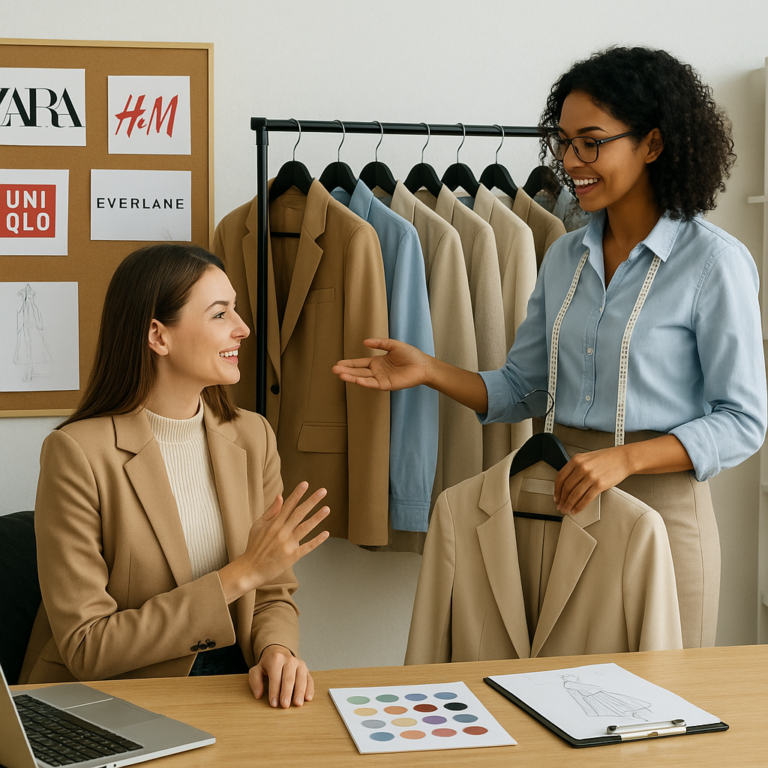
We’ve seen a fitting-room visit turn around when a stylist brought one thoughtful alternative instead of a mountain of “maybe.” That small, human moment can matter more than a flashy installation—especially when it helps someone leave confident in what they’re wearing.
From AI-assisted personalization and augmented reality to repair clinics, community events, and pop-ups, the strongest ideas share one rule: give customers a real reason to visit, participate, and come back. Here are 15 trends shaping experiential retail in 2026 and beyond.
Key Takeaways
- Build experiences around customer needs: Styling, fitting, customization, education, and convenient services can make physical shopping meaningfully different from browsing online.
- Use technology to reduce friction: AI, augmented reality, and smart fitting-room tools work best when they help customers make decisions—not when they add extra steps.
- Make stores community destinations: Workshops, local collaborations, pop-ups, sports events, and wellness programming can create reasons to return.
- Keep shopping practical and inclusive: Memorable design should never compromise accessibility, comfort, privacy, clear service, or easy checkout.
- Measure more than foot traffic: Track relevant outcomes such as conversion, repeat visits, appointment bookings, customer feedback, and omnichannel sales.
- Start with a focused pilot: Test one well-matched experience, learn from customers and staff, then refine before making a larger investment.
Table of Contents
- ⚡️ Quick Tips and Facts: Experiential Retail at a Glance
- 🧭 What Is Experiential Retail?
- Experiential retail vs. traditional brick-and-mortar shopping
- Why stores are becoming experience destinations
- 📜 How Experiential Retail Evolved
- From flagship stores to immersive brand worlds
- The role of e-commerce, changing habits, and the pandemic
- 📈 The Brick-and-Mortar Retail Market and Its Opportunity
- Why physical retail still matters
- Retail investment, returns, and business potential
- 🔥 15 Experiential Retail Trends Shaping 2026 and Beyond
- 1. Immersive, multisensory store design
- 2. Personalized shopping powered by data and AI
- 3. Virtual try-on and augmented reality
- 4. Social commerce and shareable in-store moments
- 5. Community events, classes, and workshops
- 6. Hospitality-inspired service and human connection
- 7. Live demonstrations and product discovery
- 8. Experiential pop-ups and temporary retail
- 9. Omnichannel services and seamless fulfillment
- 10. Retail media and shoppable experiences
- 11. Resale, repair, and circular retail
- 12. Local storytelling and neighborhood partnerships
- 13. Wellness, beauty, and self-care experiences
- 14. Sports, entertainment, and fandom-led retail
- 15. Inclusive, accessible, and sensory-considerate stores
- 🧩 How to Build an Experiential Retail Strategy
- Define your audience, objectives, and brand promise
- Choose the right retail mix and store format
- Design a customer journey that feels effortless
- Balance memorable experiences with practical shopping
- 📱 Retail Technology: What Works Now and What Comes Next
- Mobile apps, smart fitting rooms, and connected stores
- AI, computer vision, and customer data
- Privacy, security, and responsible technology use
- 🏟️ Sports-Centric Venues and Fan Experiences
- Stadium retail, team stores, and live-event merchandising
- Turning fandom into year-round community
- 🏬 The Future of Malls and Experiential Shopping Districts
- From shopping centers to mixed-use destinations
- Entertainment, dining, wellness, and retail under one roof
- How landlords and retailers can collaborate
- 💰 Experiential Retail Costs, Budgets, and Measurement
- What drives the cost of an in-store experience
- How to budget for design, staffing, technology, and events
- Retail KPIs: dwell time, conversion, loyalty, and lifetime value
- Testing experiences and proving return on investment
- 🌱 Sustainability, Accessibility, and Responsible Store Design
- Lower-impact materials, energy, and event production
- Designing welcoming spaces for more customers
- 🤝 How Local Governments Can Support Experiential Retail
- Permits, public spaces, and small-business partnerships
- Building vibrant, walkable retail districts
- 🔮 What’s Next for Experiential Retail
- Emerging trends retailers should watch
- How brands can prepare for the next wave of change
- ✅ Conclusion
- 🔗 Recommended Links
- ❓ FAQ
- What does experiential retail mean?
- Why is experiential retail important?
- What are examples of experiential retail?
- How does experiential retail increase sales?
- How can small retailers create memorable experiences?
- How do you measure experiential retail success?
- 📚 Reference Links
⚡️ Quick Tips and Facts: Experiential Retail at a Glance
For a quick sense of how shopping habits and fashion retail are changing, start with our clothing brand statistics guide. The big takeaway: people still want products, but they increasingly want confidence, connection, discovery, and a reason to leave the sofa.
Experiential retail turns a store visit into something more useful or memorable than a checkout. That could mean expert styling, a customization bar, a local designer event, a repair service, or a beautifully designed space where browsing feels like part of the treat.
| Quick fact | What it means for retailers |
|---|---|
| Physical stores remain a major part of shopping | Treat the store as a customer experience and service channel, not just a shelf with a door. |
| Younger shoppers use both online and in-person retail | Make discovery, try-on, pickup, returns, and loyalty work across channels. |
| Technology can personalize a visit | Use it to remove friction or improve recommendations, not merely to decorate a screen. |
| Events can create reasons to return | Connect programming to the brand’s products, expertise, and local community. |
| Not every experience needs a large buildout | A skilled stylist, thoughtful fitting-room service, or repair clinic can be more effective than a costly spectacle. |
| Results should be measured | Track conversion, repeat visits, appointment bookings, customer feedback, and omnichannel sales—not selfies alone. |
Our stylist’s quick checklist:
- ✅ Give customers something they cannot get as easily online: fitting help, tactile discovery, alteration, advice, or community.
- ✅ Make the experience fit the brand. A performance-running clinic makes sense at a sportswear store; a random photo wall may not.
- ✅ Keep access simple: clear event details, easy booking, welcoming staff, and accessible layouts.
- ✅ Make the digital and physical experiences cooperate. Your online stock checker should not send someone on a wild goose chase.
- ❌ Don’t confuse spectacle with strategy. A viral moment is not automatically a reason to visit again.
- ❌ Don’t collect more personal data than you need or can responsibly protect.
The National Retail Federation’s retail research and International Council of Shopping Centers’ consumer insights are useful starting points for understanding the retail environment. For a brisk customer-experience perspective, the featured video on experiential retail and why in-person still matters makes the case that products alone are no longer the whole story.
🧭 What Is Experiential Retail?
Experiential retail is a strategy that makes shopping more engaging, useful, participatory, or emotionally memorable. It can involve store design, service, events, technology, product demonstrations, community activity, or a combination of them.
In fashion, the experience might be a personal styling appointment at Nordstrom, a customization experience at Nike, or a local event hosted by a boutique. The common thread is intentionality: the activity should help customers connect with the brand or make a better shopping decision.
It doesn’t have to be grand. Sometimes the best experience is a fitting room where staff actually bring the next size before you have to stage a one-person escape room around the curtain.
Experiential retail vs. traditional brick-and-mortar shopping
Traditional retail often focuses on product availability, merchandising, and transaction efficiency. Experiential retail keeps those basics, then adds a reason to explore, participate, learn, or return.
| Retail element | Transaction-focused approach | Experience-led approach |
|---|---|---|
| Store visit | Browse and buy | Discover, try, learn, connect, and buy |
| Staff role | Process transactions | Offer knowledgeable, consent-based help |
| Store design | Display and circulation | Brand storytelling, comfort, discovery, and function |
| Technology | Checkout and inventory | Useful personalization, services, or interactive discovery |
| Events | Occasional promotion | Relevant programming that encourages repeat engagement |
| Success measures | Sales and foot traffic | Sales plus conversion, satisfaction, loyalty, and repeat visits |
The difference is not “old retail bad, new retail good.” Customers still value speed and convenience. A memorable store that makes checkout, pickup, or returns irritating is an experience, technically, but not one anyone will brag about.
Why stores are becoming experience destinations
Online shopping is excellent at selection and convenience. A physical store can add immediate product access, tactile evaluation, human expertise, social time, and a sense of place. That is why NetChoice’s 2026 retail analysis describes the shift from simply selling a product to creating a worthwhile customer experience.
The U.S. Bureau of Labor Statistics’ Consumer Expenditure Survey and the U.S. Census Bureau’s quarterly retail e-commerce data help retailers understand spending and channel patterns. The precise mix varies by category and date, so we recommend checking current data rather than treating a single forecast as a universal truth.
Our fashion-stylist view: stores earn their keep when they help customers answer questions they may struggle to solve online:
- Does this fit my body comfortably?
- Does the color work with what I own?
- Can I style it for more than one occasion?
- Is this fabric right for the weather, care routine, or activity?
- Can someone help me make a confident choice without pressuring me?
Those are not small details. They’re the difference between a useful visit and a fitting-room pile that looks like a laundry basket lost a fight.
📜 How Experiential Retail Evolved
From flagship stores to immersive brand worlds
Retail experiences have roots in department-store theater, branded flagship shops, product demonstrations, and community events. What has changed is the scale of the strategy: retailers increasingly design stores to connect product, service, digital content, and culture.
Fashion brands have long used flagships to express a visual identity. Today, that idea extends to smaller stores, pop-ups, service hubs, and brand activations. Apple’s Today at Apple sessions show how classes can turn a retail location into a learning space, while Nike House of Innovation combines product discovery and brand storytelling.
For a broader look at how fashion labels position themselves, explore our Clothing Brand Guides and Brand Collaboration Highlights.
The role of e-commerce, changing habits, and the pandemic
E-commerce raised expectations for convenience: searchable inventory, fast information, delivery options, and easy returns. The pandemic accelerated digital adoption, but it also reminded retailers that people value in-person interaction, community, and the ability to see or try products before buying.
The U.S. Census Bureau’s e-commerce statistics provide a recurring view of online retail sales. That data should be read alongside in-store activity: online and physical retail are often complementary, not competing camps.
A brand may use digital channels to inspire a visit, the store to enable fitting and advice, and e-commerce to ship a size or color unavailable locally. That connected model is often called omnichannel retail. The customer does not care which department owns the handoff. They just want it to work.
📈 The Brick-and-Mortar Retail Market and Its Opportunity
Why physical retail still matters
Stores offer immediate access and a hands-on way to assess a product. In apparel, touch, drape, opacity, stretch, and fit can be hard to judge from a product image. A knowledgeable associate can also help customers compare silhouettes or build outfits across brands.
The International Council of Shopping Centers publishes research on shopping behavior and retail real estate. A 2025 report from CREDAI Global on experiential retail cites an ICSC finding that 97% of surveyed Gen Z consumers shop in brick-and-mortar stores. That figure is from the survey described in the report; it should not be read as proof that every young shopper prefers stores for every purchase.
The same report quotes retail leaders describing retail as “something much more creative and experiential.” The idea is persuasive, but the practical lesson is more grounded: physical retail remains useful when it offers value beyond the transaction.
Retail investment, returns, and business potential
Experience-led retail can support customer acquisition, repeat visits, product discovery, and brand loyalty. It can also require investment in store design, staffing, technology, event operations, maintenance, and measurement.
There is no reliable one-size-fits-all return-on-investment figure. A small styling service may work beautifully in one market, while a high-tech installation may be costly and underused in another. The right business case depends on the audience, local demand, operating capacity, and the experience’s connection to products or services.
| Potential benefit | How it may show up | What to verify |
|---|---|---|
| More store visits | Appointment demand, event attendance, foot traffic | Are visits incremental or merely shifted from another day? |
| Higher conversion | More purchases per visit or appointment | Are customers buying because the experience helped, or due to a one-off promotion? |
| Stronger loyalty | Repeat visits, referrals, member engagement | Do customers return after the event ends? |
| Better product discovery | More categories tried, outfit building | Does discovery lead to useful purchases and lower returns? |
| Omnichannel lift | Online orders after store interaction | Can sales be attributed responsibly and consistently? |
| Community relevance | Local partnerships and participation | Is the programming genuinely useful to the neighborhood? |
For brand ethics and production context that can influence in-store storytelling, see our guides to Brand Manufacturing Practices and Brand Quality Comparisons.
🔥 15 Experiential Retail Trends Shaping 2026 and Beyond
These trends are not a checklist to copy blindly. The strongest ideas solve a customer problem or express a brand’s point of view. As NetChoice’s overview of experiential retail argues, experience is becoming central to physical retail; the best test is still whether customers find the experience worth their time.
1. Immersive, multisensory store design
Stores are using lighting, texture, sound, layout, scent, and visual storytelling to create a distinctive mood. For fashion, materials and merchandising can help customers understand the brand’s aesthetic before they reach a rack.
Benefits: stronger brand recognition, more inviting browsing, and a setting that supports discovery.
Watch-outs: intense sound, fragrance, crowding, or dramatic lighting can make a store uncomfortable or inaccessible. Design should welcome more than one type of shopper.
Aesop is known for store environments that respond to local architecture and materials; its store locator and brand site offer examples of its retail identity. The lesson is not to imitate a particular look. It is to make the space feel purposeful rather than decorated for decoration’s sake.
2. Personalized shopping powered by data and AI
Retailers use purchase history, stated preferences, fit feedback, and inventory data to make more relevant recommendations. In fashion, this might mean preparing a stylist appointment with sizes and colors a customer has asked to try.
Good personalization: transparent, optional, and genuinely helpful.
Bad personalization: intrusive, inaccurate, or based on assumptions customers never approved.
Retailers should explain what data they collect and why, and offer practical control over marketing preferences. The Federal Trade Commission’s consumer privacy guidance is a useful starting point for responsible data practices.
3. Virtual try-on and augmented reality
Augmented reality can help customers preview products, colors, or styling combinations through a phone or in-store display. It can be particularly useful for accessories, beauty, footwear, and product visualization.
For apparel, virtual fit tools are still imperfect. A digital overlay is not the same as testing stretch, drape, movement, or garment construction on a real body. Treat AR as a decision aid, not a promise of perfect fit.
Retailers can explore AR guidelines and use cases through Snap’s AR business resources and product-specific tools from brands such as Nike. Always communicate the limits of virtual sizing or fit estimates.
4. Social commerce and shareable in-store moments
Shareable moments can help customers discover a store through social media, but the experience needs substance behind the camera angle. A styling event, customization station, or local collaboration gives customers something to talk about and do.
Our rule: build a moment worth sharing, not a backdrop that asks people to manufacture the fun themselves.
Customers should be able to enjoy the experience without posting online. Avoid making social sharing a condition of participation, and ask permission before using customer images.
5. Community events, classes, and workshops
Retailers are increasingly using classes, demonstrations, and meetups to turn expertise into programming. In fashion, that could include denim fit clinics, capsule-wardrobe sessions, repair workshops, tailoring demonstrations, or personal-color consultations.
The NetChoice article highlights education-led examples across retail, including Apple’s free Today at Apple programming and workshops at The Home Depot. The transferable idea is useful activity tied to what the retailer knows, rather than a generic event for the calendar.
6. Hospitality-inspired service and human connection
Hospitality thinking shows up in clear greetings, comfortable waiting areas, water or seating where appropriate, and staff who can read whether a customer wants help or room to browse.
For fashion, service may include appointment-based styling, thoughtful fitting-room support, alterations referrals, and complete outfit suggestions. The best associates do not treat “Can I help you?” as a magic spell. They listen, offer a relevant option, and give customers space to decide.
7. Live demonstrations and product discovery
Demonstrations help customers understand how products work and what makes them different. Apparel examples include fabric-care tutorials, garment-construction education, layering demonstrations, and comparisons of technical features.
This is especially useful for products where function matters: performance leggings, waterproof outerwear, travel clothing, or footwear. Retailers should keep demonstrations accurate and specific. “This fabric is breathable” is more useful when staff can explain what that means in use and care.
8. Experiential pop-ups and temporary retail
Pop-ups let brands test a market, collaborate, launch a collection, or meet customers in a new place without committing to a permanent store. They can also make a digital-first brand tangible.
A strong pop-up has a clear job:
- Define the customer and business objective.
- Choose a location where that audience already spends time.
- Select a focused assortment and service offer.
- Plan staffing, inventory, accessibility, permits, and fulfillment.
- Collect feedback and measure outcomes.
- Decide what to repeat, refine, or stop.
For lower-risk fashion discovery, a pop-up can be a useful way to test local demand before investing in a longer-term space. But temporary does not mean effortless: logistics, staffing, insurance, and clear post-event follow-up still matter.
9. Omnichannel services and seamless fulfillment
Customers expect stores, websites, apps, and customer service to feel connected. Useful services include checking local inventory, buying online and picking up in store, ordering a missing size for delivery, and returning eligible online purchases in person.
The NRF’s research and resources cover evolving retail operations and consumer expectations. For retailers, the practical work is often unglamorous: accurate inventory, consistent product details, clear policies, and staff access to the right order information.
10. Retail media and shoppable experiences
Retail media connects a retailer’s digital or physical audience with sponsored product discovery. In a store, that may appear as a display, event sponsorship, or curated brand feature; online, it can include sponsored listings and content.
The opportunity is relevant discovery. The risk is turning every surface into an advertisement. Sponsored content should be identified clearly, and the store experience should still serve customers first.
11. Resale, repair, and circular retail
Repair, resale, trade-in, and garment-care services extend the relationship beyond the initial sale. They can help customers maintain items, find secondhand pieces, or understand how to care for what they own.
Brands such as Patagonia and Levi’s offer repair-related services or information. Availability varies by location and product, so customers should check current program details.
Fashion-stylist tip: repair services can be an experience in their own right. A visible mending demonstration or denim-care clinic turns sustainability from a slogan into something customers can see and learn.
12. Local storytelling and neighborhood partnerships
Local artists, makers, fitness studios, charities, schools, and small businesses can help a store feel rooted in its community. Partnerships work best when both sides contribute meaningfully and the collaboration has a clear benefit for participants.
The NetChoice article describes hyperlocal retail programming, including community-led events and local partnerships. For a clothing store, possibilities include a neighborhood designer showcase, a local running-club meetup, or a clothing-care workshop led by a tailor.
13. Wellness, beauty, and self-care experiences
Retailers are incorporating wellness-oriented services, quiet areas, movement classes, and beauty consultations. Fashion brands may offer yoga, movement sessions, or styling for different activities—but should be careful not to imply medical benefits without evidence.
A wellness offering should be optional, accessible, and connected to the brand’s expertise. A calming corner is lovely; a store that blocks the accessible route to get there is not.
14. Sports, entertainment, and fandom-led retail
Sports and entertainment can create powerful reasons to gather. Retail formats may combine fan merchandise with exhibitions, events, team history, product customization, and community programming.
For apparel brands, fandom-led retail can extend beyond licensed merchandise: athlete appearances, performance clinics, viewing events, and local team partnerships can help customers participate rather than merely purchase.
15. Inclusive, accessible, and sensory-considerate stores
Accessibility is not a bonus feature. It is part of whether a customer can use the store. Consider step-free routes, fitting-room access, readable signage, seating, lighting, clear aisles, and staff training.
The U.S. Access Board provides guidance on accessibility standards. Retailers should also seek feedback from disabled customers and local accessibility specialists; a compliance checklist alone cannot tell you whether a space feels easy to use.
Sensory-considerate options may include quieter hours, reduced music, unscented areas, and advance information about crowds or lighting. These accommodations can benefit many customers, not only those who request them.
🧩 How to Build an Experiential Retail Strategy
Define your audience, objectives, and brand promise
Start by asking three questions:
- Who is the experience for? Be specific about customer needs and shopping context.
- What should the experience help them do? Discover, learn, try, customize, connect, or purchase?
- What should the business learn or achieve? Test a location, improve conversion, encourage repeat visits, or strengthen loyalty?
Then connect the idea to the brand promise. A heritage denim company might offer repair and fit education. A performance label might run a local movement clinic. A boutique might host a wardrobe-planning appointment.
Avoid: choosing a technology or event first, then searching for a reason it belongs.
Choose the right retail mix and store format
A successful retail mix depends on local audience, competition, site access, surrounding businesses, transportation, parking, and demand. The 2025 CREDAI report emphasizes that a ski-area center, a value-focused mall, and an urban lifestyle district need different tenant mixes and experiences.
| Format | Strong fit when the goal is… | Possible experience |
|---|---|---|
| Flagship | Brand storytelling and destination visits | Product labs, services, cultural programming |
| Neighborhood store | Repeat visits and convenience | Local events, appointments, quick pickup |
| Pop-up | Market testing or a focused launch | Limited collection, customization, community collaboration |
| Outlet or value center | Discovery and practical shopping | Clear product information, family-friendly amenities |
| Mixed-use destination | Longer visits and multiple reasons to come | Dining, fitness, entertainment, retail, public space |
Design a customer journey that feels effortless
Map the experience from before the visit through follow-up:
- Discovery: Can customers understand what the store offers?
- Arrival: Is the location easy to reach and enter?
- Welcome: Do customers know where to go without feeling cornered?
- Exploration: Are products and services easy to find?
- Decision: Can customers get fitting, product, and availability help?
- Checkout or fulfillment: Is the next step clear and convenient?
- Follow-up: Do customers receive relevant information, not a blizzard of messages?
Our stylists have seen the best service begin with a small moment: an associate asking what the customer is dressing for, then bringing a useful selection rather than ten unrelated “options.” That is personalization without the surveillance soundtrack.
Balance memorable experiences with practical shopping
A retail experience must work for people who want to browse for five minutes as well as those who want to spend an afternoon. Make events and installations optional, preserve clear shopping routes, and keep core services easy to find.
A good design question is: If the event were not happening today, would the store still be easy to shop? If the answer is no, the experience may be overpowering the retail function.
📱 Retail Technology: What Works Now and What Comes Next
Mobile apps, smart fitting rooms, and connected stores
Useful retail technology reduces uncertainty or effort. Examples include:
- Local inventory lookup
- Appointment booking
- Digital receipts and order history
- Fitting-room requests for another size
- Product details and care guidance
- Self-service pickup and returns
Smart mirrors and connected fitting rooms can help shoppers request sizes or view styling options, but they need reliable inventory and a low-friction interface. If the mirror takes longer to understand than the outfit, it has missed the plot.
AI, computer vision, and customer data
AI may support search, product recommendations, forecasting, inventory visibility, and customer service. Computer vision can be used in retail operations, but camera-based systems raise significant privacy, accuracy, and trust questions.
Walmart’s Intelligent Retail Lab, described by NetChoice, was an example of a retailer testing store technology and operational insights. It is a case study, not proof that every retailer needs cameras or an AI lab.
Use technology when it improves a real task. For a fashion store, that might mean helping staff locate a garment or giving customers accurate size availability. Avoid presenting automated recommendations as objective truth, especially when sizing systems can perform differently across brands and bodies.
Privacy, security, and responsible technology use
Retailers should be clear about data collection, minimize what they retain, protect customer information, and provide meaningful choices. The FTC’s privacy and security guidance explains core obligations and good practices for businesses.
Before launching a tool, ask:
- What data does it collect?
- Is that data necessary for the feature?
- How long is it retained?
- Who can access it?
- Can customers use the service without consenting to unrelated tracking?
- How will the retailer explain the system if a customer asks?
Trust is part of the experience. A clever tool that makes people uneasy is not clever enough.
🏟️ Sports-Centric Venues and Fan Experiences
Stadium retail, team stores, and live-event merchandising
Sports venues can combine team stores with product launches, personalization, exhibits, and event-day services. The strongest concepts consider both peak event crowds and ordinary weekday use.
A store inside an arena may benefit from limited-edition merchandise and fast checkout during events. A nearby retail district may need dining, family activities, fitness, or local shopping to stay active between games.
Turning fandom into year-round community
Sports-focused destinations can build routines beyond game day through youth programs, training, watch parties, fitness, and community events. The 2025 CREDAI report describes Seattle’s Northgate Station as a mixed-use development featuring the Kraken Community Iceplex alongside retail, homes, offices, and shared space.
The broader lesson: a venue’s experience should work for residents and visitors, not only ticket holders. Transportation, event schedules, parking, and neighborhood needs all shape whether a sports-led development becomes a destination or a traffic jam wearing a jersey.
🏬 The Future of Malls and Experiential Shopping Districts
From shopping centers to mixed-use destinations
Some shopping centers are adding housing, hotels, offices, sports, healthcare, and public spaces. Examples cited in the CREDAI report include Southdale Center, Northgate Station, Smith Haven Mall, Fifth + Broadway, The Hub on Causeway, and Brea Mall.
These projects are not interchangeable. Their scale, local market, property condition, and surrounding infrastructure differ. A mixed-use redevelopment may work in one market and be unrealistic in another.
Entertainment, dining, wellness, and retail under one roof
Dining, fitness, entertainment, and wellness can create complementary reasons to visit. But a long list of tenants alone does not make a successful destination. The spaces need coherent planning, convenient circulation, clear access, good maintenance, and experiences that answer local needs.
A family might combine errands with a meal and children’s activity. A visitor may come for a class, then browse. A local resident may use a fitness facility several times a week. Those overlapping routines can support repeat traffic when the mix is thoughtfully designed.
How landlords and retailers can collaborate
Landlords can support retailers with shared events, signage, public-space programming, coordinated marketing, and useful visitor data. Retailers can contribute local expertise and programming that encourages cross-traffic.
The CREDAI report quotes real-estate leaders emphasizing duration of stay, repeat visits, and cross-traffic. Those are useful measures, but they should be balanced with customer satisfaction and operating realities. More time in a mall is not automatically good if people are lost, uncomfortable, or waiting for an elevator.
💰 Experiential Retail Costs, Budgets, and Measurement
What drives the cost of an in-store experience
Costs can include design, construction, fixtures, permits, technology, staffing, training, event production, insurance, maintenance, and accessibility improvements. Pop-ups also involve logistics, temporary utilities, storage, and inventory movement.
| Cost area | Typical considerations | Lower-cost test |
|---|---|---|
| Design and build | Materials, installation, safety, upkeep | Refresh a focused zone before renovating the whole store |
| Staff and training | Scheduling, expertise, event coverage | Pilot a recurring appointment block |
| Technology | Hardware, software, integration, support | Test one customer-facing feature with clear use |
| Events | Materials, instructors, promotion, cleanup | Run a small workshop with advance registration |
| Operations | Inventory, shipping, security, maintenance | Use existing systems where practical |
| Measurement | Analytics, surveys, attribution | Define a simple baseline and track a few outcomes |
No single budget is right for every store. We recommend validating demand with a small, reversible pilot before making a large fixed investment.
How to budget for design, staffing, technology, and events
Build a budget around the entire customer experience, not only the visible installation:
- Set a clear objective and define what success would look like.
- Estimate one-time costs and recurring costs separately.
- Include staff time, training, setup, and maintenance.
- Check accessibility, safety, permits, and insurance requirements.
- Identify what data or feedback is needed to evaluate the pilot.
- Set a review date and a decision rule before launch.
A beautiful activation that cannot be staffed consistently is like a fabulous coat with a broken zipper: promising at first glance, frustrating in practice.
Retail KPIs: dwell time, conversion, loyalty, and lifetime value
Choose measures that match the experience’s purpose. A class may be designed to build engagement rather than produce a same-day purchase; a fitting service may be expected to improve confidence and conversion.
| KPI | What it tells you | Caution |
|---|---|---|
| Foot traffic | How many people entered or passed through | More visits do not prove better experience |
| Conversion rate | Share of visitors who purchase | Compare like-for-like periods and traffic sources |
| Dwell time | Time spent in the space | Longer stays may reflect friction, not enjoyment |
| Appointment attendance | Demand for a service | Track cancellations and repeat bookings |
| Event participation | Engagement with programming | Attendance alone says little about value |
| Return rate | Product or fit dissatisfaction signals | Interpret by category and policy |
| Repeat visits | Potential loyalty and relevance | Use privacy-conscious, reliable measurement |
| Customer feedback | Qualitative strengths and friction | Invite honest responses, not just compliments |
Testing experiences and proving return on investment
Use a pilot-and-learn cycle:
- Record a baseline before launch.
- Test one experience in a defined location or time period.
- Compare results with a relevant control or previous period.
- Gather staff and customer feedback.
- Review both financial and experience outcomes.
- Refine, expand, or stop based on evidence.
Do not claim causation from a simple before-and-after comparison. Weather, promotions, seasonality, nearby events, and stock availability can affect results. A thoughtful evaluation is more credible than a flashy percentage with no context.
🌱 Sustainability, Accessibility, and Responsible Store Design
Lower-impact materials, energy, and event production
Retailers can consider durable fixtures, repairable displays, reusable event materials, energy-efficient lighting, responsible packaging, and thoughtful product education. Temporary installations should be designed for reuse or responsible recovery where feasible.
The U.S. Environmental Protection Agency’s sustainable materials management resources offer useful context for reducing waste. For fashion-specific sourcing and garment-care questions, our Brand Manufacturing Practices category can help readers investigate brand claims.
Designing welcoming spaces for more customers
Accessibility should be planned from the beginning, including entrances, routes, fitting rooms, signage, seating, restrooms, and event participation. The U.S. Access Board’s ADA resources provide standards and guidance.
Consider these practical details:
- Maintain wide, clear routes and avoid merchandise creep into aisles.
- Provide seating near fitting rooms where possible.
- Make event registration and store information available in accessible formats.
- Offer quiet or lower-sensory options when feasible.
- Train staff to ask before assisting and respect a customer’s preferred communication.
A welcoming store is not one where everyone is treated identically. It is one where more people can participate comfortably.
🤝 How Local Governments Can Support Experiential Retail
Permits, public spaces, and small-business partnerships
Local governments can help by making event permits understandable, coordinating across departments, supporting temporary uses, and enabling partnerships between landlords, businesses, and community groups.
The CREDAI report emphasizes collaboration on zoning, infrastructure, and community needs. That approach matters because retail projects can affect traffic, public space, noise, and neighborhood access. Early communication is cheaper than discovering community concerns after the ribbon is ordered.
Building vibrant, walkable retail districts
A strong district needs more than attractive storefronts. Safe crossings, transit access, lighting, shade, public seating, wayfinding, and clean, maintained public areas all shape the experience.
Cities can support small businesses through technical assistance, shared events, and clear guidelines for outdoor programming. Retailers, in turn, should listen to residents and avoid treating local character as a decorative theme.
🔮 What’s Next for Experiential Retail
Emerging trends retailers should watch
Expect more emphasis on local relevance, useful programming, flexible spaces, connected services, responsible personalization, circular fashion, and human-centered design. Retail spaces may increasingly combine shopping with work, living, dining, wellness, entertainment, and public life.
The 2025 CREDAI report describes future retail destinations as “local, immersive and human-centered.” That direction is credible, but execution will vary by place. A neighborhood shopping street and a major mixed-use development have different needs, costs, and audiences.
The NetChoice article on experiential retail in 2026 also stresses that experiences should offer real value, not just novelty. That is the key tension: technology and spectacle attract attention, but usefulness and connection earn repeat visits.
How brands can prepare for the next wave of change
Retailers can prepare without predicting every trend:
- Keep store design flexible enough for changing assortments and events.
- Invest in staff knowledge and service skills.
- Test new ideas at a manageable scale.
- Connect experience metrics to business goals.
- Make accessibility, privacy, and sustainability part of planning.
- Ask customers what would make a visit more useful.
- Retire experiences that look impressive but do not serve customers.
One unresolved question remains: how much technology should a store add before the technology becomes the main attraction? The answer is simple to state and harder to build: enough to make shopping easier, never so much that it crowds out people, product, and purpose.