Support our educational content for free when you purchase through links on our site. Learn more
🧵 How Clothing Brands Shape Trends: The 2026 Truth

Ever wonder why you suddenly see ballet flats on every street corner, or why a specific shade of green dominates your Instagram feed? It feels like magic, but it’s actually a meticulously engineered illusion of choice. At Clothing Brands™, we’ve watched the industry shift from the slow, deliberate trickle of the 20th century to the lightning-fast, algorithm-driven tsunami of today. The story isn’t just about a few designers in Paris anymore; it’s about a complex web where luxury houses set the vision, street culture provides the fuel, and social media algorithms act as the accelerant.
In this deep dive, we’re pulling back the curtain on the trend lifecycle. We’ll reveal how a single runway sketch can morph into a mass-market staple in weeks, why your favorite “micro-trend” might vanish before you even finish reading this, and the surprising role you play in this cycle. We’ll also decode the psychology behind why we buy what we buy and share insider secrets on how to spot the next big thing before it hits the mall. By the end, you won’t just be a consumer; you’ll be a trend analyst with a front-row seat to the fashion world’s greatest show.
Key Takeaways
- The Cycle Has Accelerated: The traditional 18-month trend lifecycle has collapsed into weeks due to fast fashion and social media algorithms.
- Democratization of Influence: Trends no longer just trickle down from the elite; they now bubble up from street style and viral TikTok moments.
- Data-Driven Design: Major brands now rely on real-time analytics and AI to predict and manufacture demand, rather than just artistic intuition.
- Consumer Power: Your purchasing decisions are the final vote; conscious consumption is reshaping how brands operate and what they produce.
- Nostalgia is King: Brands are increasingly mining the past, proving that reviving old styles is often more profitable than inventing new ones.
Table of Contents
- ⚡️ Quick Tips and Facts
- 🕰️ The Evolution of Fashion: From Royal Decrees to Street Style
- 🧠 What Actually Sparks a Fashion Trend? The Psychology Behind the Hype
- 🏭 The Power of the House: How Major Clothing Brands Dictate the Narrative
- 📱 The Digital Runway: How Social Media Algorithms Accelerate Trend Cycles
- 👗 The Trend Lifecycle: From Concept to Fast Fashion and Back Again
- 🔍 Decoding the Runway: How Designers Translate Art into Wearable Trends
- 🌍 Global Influences: How Culture, Subcultures, and Celebrities Shape Brand Directions
- 🛍️ The Consumer’s Role: How Your Wallet Votes for the Next Big Thing
- 🚀 How Trend Knowledge Can Supercharge Your Fashion Career
- 💡 Insider Secrets: How to Spot the Next Trend Before It Hits the Mall
- 📚 Recommended Links
- ❓ FAQ: Your Burning Questions About Fashion Trends Answered
- 📖 Reference Links
⚡️ Quick Tips and Facts
Before we dive into the deep end of the fashion ocean, let’s grab a life preserver of some essential truths about how the industry actually works. You might think your favorite outfit appeared out of thin air, but every stitch has a story of influence.
- The 2-Year Lag: It typically takes 18 to 24 months for a trend to travel from a high-fashion runway to a mass-market store. However, thanks to social media, this is shrinking to mere weeks for “micro-trends.”
- Color is Data, Not Magic: When you see a specific shade of blue dominating every store, it’s rarely a whim. Brands consult Pantone and massive data firms to predict the “Color of the Year” based on global economic and social moods.
- The “Trickle” is Broken: The old theory that trends only flow from rich to poor (Trickle-Down) is dead. Today, trends often bubble up from the streets (Trickle-Up) or spread instantly across all classes simultaneously (Trickle-Across).
- Influencers > Editors: In 2024, a TikTok creator with 50k followers can launch a trend faster than Vogue magazine. Brands now pay influencers to coordinate posts, creating an artificial “Rise” phase in the trend cycle.
- Nostalgia is Currency: Brands like Prada and Gucci have proven that reviving a 30-year-old design (like the Prada Nylon bag) can be more profitable than inventing something new.
For a deeper dive into how these mechanics affect your wallet and style, check out our comprehensive guide on Clothing Brands.
🕰️ The Evolution of Fashion: From Royal Decrees to Street Style
Fashion hasn’t always been a democratic playground. For centuries, what you wore was dictated by royal decres and sumptuary laws. If you weren’t royalty, you couldn’t wear purple silk. But as we moved into the 20th century, the power dynamic shifted.
The Rise of the Designer House
In the late 19th and early 20th centuries, figures like Charles Frederick Worth and later Coco Chanel changed the game. They didn’t just make clothes; they created identities. Chanel’s introduction of the “little black dress” and loose silhouettes in the 1920s wasn’t just a style choice; it was a societal rebellion against the restrictive corsets of the Victorian era.
“Coco Chanel disrupted the 1920s corset trend by introducing loser, flowing silhouettes, demonstrating how a single brand can shift societal norms.” — Glam Observer
The Democratization of Style
Fast forward to the 1960s and 70s. The youthquake and the rise of street culture meant that fashion no longer trickled down from Paris alone. It started bubling up from London’s King’s Road and New York’s punk scene. Brands like Vivienne Westwood took these subcultural styles and sold them back to the mainstream, proving that street style could dictate high fashion.
Today, the cycle is so fast that a trend can be born on a TikTok dance, worn by a celebrity, copied by Shein, and discarded by the time you finish reading this sentence.
🧠 What Actually Sparks a Fashion Trend? The Psychology Behind the Hype
Why do we suddenly all want to wear “ballet flats” or “cargo pants” at the exact same time? It’s not magic; it’s psychology.
The Need for Belonging
Humans are tribal creatures. We wear trends to signal group membership. When a brand like Nike releases a new silhouette, wearing it signals that you are part of the “in-group.” This is the Bandwagon Effect in action.
The Fear of Missing Out (FOMO)
Brands weaponize FOMO. By releasing limited “drops” (think Supreme or Hypebeast culture), they create artificial scarcity. The anxiety of missing out on a trend drives immediate purchases.
The Role of the “Early Adopter”
Every trend starts with a tiny group of Early Adopters. These are the fashion-forward individuals who aren’t afraid to look weird.
- Step 1: Early Adopters wear the new look.
- Step 2: The “Early Majority” sees it and thinks, “That’s cool, but is it safe?”
- Step 3: The “Late Majority” jumps in once the trend is everywhere.
- Step 4: The trend dies, and the cycle restarts.
But here is the twist: Who are the Early Adopters today? Is it still the editor at Vogue, or is it a 19-year-old in a bedroom in Ohio with a ring light?
🏭 The Power of the House: How Major Clothing Brands Dictate the Narrative
While social media is loud, the major fashion houses still hold the microphone. They have the budget, the heritage, and the trend forecasting agencies to plan three years in advance.
The Runway as a Blueprint
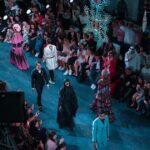
Runway shows are not just fashion shows; they are marketing presentations. Designers present collections that define the “spirit of the time” (zeitgeist).
- Luxury Brands: Often create avant-garde pieces that are “not designed for people to wear” but serve to tap into the zeitgeist.
- Mass Market: Affordable brands then interpret these ideas for the everyday consumer.
“A lot of it is not designed for people to wear, it’s to get the idea out there.” — Catherine Leslie, Ph.D., Kent State University
Case Study: The Prada Nylon Revolution
Consider Miuccia Prada. In the 1980s, she introduced Nylon fabric on the runway, a material previously associated with backpacks and parachutes, not luxury. It was a risk. But in 2019, she relaunched the iconic 1984 nylon bag as the Re-Edition 20 mini bag.
- Result: It became Lyst’s ‘Handbag of the Year’ for 2020, nearly 40 years after its original introduction.
- Lesson: Brands can revive obsolete styles to capitalize on nostalgia, proving their influence extends across decades.
The Data-Driven Designer
Modern brands don’t just guess. They use AI and big data to analyze search terms, social media engagement, and sales data to decide what to produce. If data shows a spike in “green” searches, Zara and H&M will have green items on shelves in weeks.
📱 The Digital Runway: How Social Media Algorithms Accelerate Trend Cycles
If the runway was a slow river, social media is a tsunami. The speed at which trends move has increased tenfold.
From Seasons to Weeks
Traditionally, the industry worked on a bi-annual schedule (Spring/Summer, Fall/Winter). Today, ultra-fast fashion brands like Shein, Fashion Nova, and Princess Polly operate on a weekly schedule. They can take a trend spotted on TikTok and have it in production and shipping within days.
The Algorithm as the New Editor
Algorithms on TikTok and Instagram decide what you see. If a specific style (e.g., “Mob Wife Aesthetic”) gets high engagement, the algorithm pushes it to millions of users.
- The Feedback Loop: Users post the trend -> Algorithm boosts it -> Brands see the data -> Brands mass-produce it -> Users buy it.
- The Consequence: This creates micro-trends that last only a few weeks, leading to massive overconsumption and waste.
Influencer Marketing: The New Gatekeepers
Brands no longer rely solely on fashion editors. They coordinate with influencers to promote the same product simultaneously.
- Strategy: A brand might send 50 micro-influencers the same dress. Within 24 hours, it looks like “everyone” is wearing it.
- Quote: “Influencers and social creators can direct consumers’ needs and desires and inform everyone about trends even before an editor writes about them.” — Glam Observer
👗 The Trend Lifecycle: From Concept to Fast Fashion and Back Again
Understanding the lifecycle helps you decide if a trend is worth your money.
The Four Phases of a Trend
| Phase | Description | Who is involved? | Duration (Traditional vs. Modern) |
|---|---|---|---|
| Introduction | The trend is born on the runway or in a subculture. | Designers, Early Adopters | 6-12 months (Traditional) / 2 weeks (Modern) |
| Rise | The trend gains traction; influencers and celebrities wear it. | Influencers, Celebrities | 3-6 months (Traditional) / 1-2 weeks (Modern) |
| Peak | The trend is everywhere; mass-market brands release copies. | Mass Market, General Public | 6-12 months (Traditional) / 1 month (Modern) |
| Decline | The trend becomes “over”; early adopters move on. | Everyone | 6+ months (Traditional) / 2 weeks (Modern) |
The “Fast Fashion” Accelerator
Fast fashion brands act as the bridge between the runway and the street. They use agile manufacturing to copy designs instantly.
- The Downside: This accelerates the trend cycle, turning long-lasting trends into short-lived fads.
- The Upside: It makes high-fashion aesthetics accessible to everyone, democratizing style.
🔍 Decoding the Runway: How Designers Translate Art into Wearable Trends
You might look at a runway show and think, “I could never wear that.” You’re right. But that’s not the point.
The “Idea” vs. The “Product”
Runway pieces are often conceptual art. They are designed to provoke thought, showcase a new silhouette, or test a new fabric.
- Translation: Designers and merchandisers then “translate” these concepts into wearable versions for the mass market.
- Example: A runway coat might have 20 buttons and a 6-foot train. The version you buy at Macy’s or Nordstrom will have 2 buttons and a standard length, but it retains the essence of the trend.
Color and Texture
While silhouettes take time to trickle down, colors move fast. If Pantone declares “Viva Magenta” the color of the year, you will see it in everything from lipstick to sweaters within months. This is because color is the easiest element to replicate without changing the cut of the garment.
🌍 Global Influences: How Culture, Subcultures, and Celebrities Shape Brand Directions
Fashion is a mirror of society. Brands are constantly scanning the horizon for cultural shifts.
The Rise of Streetwear
In the last decade, streetwear has completely hijacked high fashion. Brands like Louis Vuiton and Dior have collaborated with Supreme and Nike, blurring the lines between luxury and casual wear.
- Why? Because the “cool” factor has moved from the red carpet to the skate park.
- Impact: Sneakers are now the most coveted item in many luxury collections.
Celebrity Endorsements
Celebrities act as super-spreaders of trends. When Kendall Jenner wears a specific brand, it sells out instantly.
- The “It” Factor: A single photo of a celebrity in a specific outfit can launch a brand into the stratosphere.
- Case Study: Nike became the hottest brand in the world in 2020, marking the first time a luxury fashion brand did not hold the top spot on the Lyst Index. This was driven by the pandemic demand for loungewear and activewear, not by a luxury runway show.
Subcultures as Incubators
Subcultures (punk, grunge, hip-hop, cottagecore) are the incubators of new trends. Brands watch these groups, identify the aesthetic, and then sanitize it for the mainstream.
🛍️ The Consumer’s Role: How Your Wallet Votes for the Next Big Thing
Here is the secret: You are the final judge. No matter how much a brand spends on marketing, if you don’t buy it, the trend dies.
The Power of the Purchase
Every time you buy a piece, you are casting a vote.
- Sustainable Choice: If you buy from Patagonia or Reformation, you are voting for sustainability.
- Fast Fashion Choice: If you buy from Shein, you are voting for speed and low cost.
The Shift to Conscious Consumption
Consumers are becoming more aware of the environmental impact of fast fashion.
- Data Point: Year-over-year searches for sustainable fashion on Pinterest have increased by 71%.
- The Result: Brands are now forced to adapt. H&M and Zara have launched “Conscious” lines, and luxury brands are investing in recycled materials.
How to Spot the Next Trend
Want to be ahead of the curve?
- Watch the Runways: Look at Paris Fashion Week and Milan Fashion Week.
- Follow the Influencers: But look for micro-influencers who are true style icons, not just brand ambassadors.
- Listen to the Streets: Pay attention to what people are wearing in major cities like New York, London, and Tokyo.
🚀 How Trend Knowledge Can Supercharge Your Fashion Career
If you are looking to break into the fashion industry, understanding trend mechanics is your superpower.
Why It Matters
- Merchandising: You need to know what will sell next season to plan inventory.
- Design: You need to know what is “in” to create relevant collections.
- Marketing: You need to know how to position a brand to appeal to the current zeitgeist.
Actionable Steps
- Study the History: Understand the trickle-down, trickle-up, and trickle-across theories.
- Analyze Data: Learn to use tools like Google Trends, WGSN, and Pantone.
- Build a Portfolio: Create mood boards that show you can predict and interpret trends.
“When people learn from you, they trust you. When they trust you, they buy from you.” — Video Summary on Building Successful Brands
💡 Insider Secrets: How to Spot the Next Trend Before It Hits the Mall
Ready to be the first to know? Here are the insider secrets the stylists at Clothing Brands™ use.
1. Look for the “Ugly” Phase
Every trend starts as something “ugly” or weird. If you see a style that makes you say, “Who would wear that?”—watch it. That’s usually the early adopter phase.
2. Follow the Fabric
Trends often start with a specific fabric or texture. If you see a new material appearing in high-end collections, it will likely hit the mass market soon.
3. The “Drop” Model
Pay attention to limited drops. If a brand is releasing a product in small batches, it’s a sign they are testing the waters for a larger trend.
4. Social Listening
Don’t just scroll; listen. Use tools to track hashtags and keywords. If a specific term (e.g., “Gorpcore”) is spiking, it’s a trend in the making.
5. The Founder-Led Advantage
As noted in our video analysis, the most successful brands are often founder-led. People connect with people. If you see a founder sharing their journey, building in public, and engaging with their community, that brand is likely to be a trendsetter.
Pro Tip: Don’t create content for the algorithm; create it for your ideal customer. The algorithm doesn’t buy your products. People do.
Conclusion

So, how do clothing brands influence fashion trends? It’s a complex dance between art and commerce, history and innovation, and top-down and bottom-up forces.
We started by asking if trends are dictated by the elite or the masses. The answer? Both.
- Luxury brands set the vision and the narrative.
- Social media and subcultures provide the fuel and the speed.
- Consumers provide the vote that determines the winner.
The trend cycle is faster than ever, driven by algorithms and data, but the core human desire for self-expression and belonging remains unchanged. Whether you are a consumer looking to update your wardrobe or an aspiring fashion professional, understanding these mechanics is your key to success.
The Final Word: Don’t just follow trends; understand them. Use them to tell your own story. And remember, the most enduring style is the one that feels authentic to you.
📚 Recommended Links
Ready to elevate your style or start your career? Here are our top picks for products, books, and resources.
Top Brands to Watch for Trend Leadership
- Prada: For the masterclass in reviving heritage trends.
👉 Shop Prada on: Amazon | Official Website - Nike: For the ultimate streetwear and activewear influence.
👉 Shop Nike on: Amazon | Official Website - Shein: For ultra-fast fashion trend replication (use with caution).
👉 Shop Shein on: Amazon | Official Website - Patagonia: For sustainable fashion leadership.
👉 Shop Patagonia on: Amazon | Official Website
Essential Reading for Fashion Professionals
- “The Fashion System” by Roland Barthes: A deep dive into the semiotics of fashion.
Buy on: Amazon - “Dressed: The History of Fashion” by Caroline Cox: A comprehensive look at how fashion has evolved.
Buy on: Amazon - “Fashion: The Definitive History of Costume and Style” by DK: A visual guide to fashion history.
Buy on: Amazon
❓ FAQ: Your Burning Questions About Fashion Trends Answered

How do social media platforms amplify clothing brand trends?
Social media acts as a supercharger for trends. Algorithms on platforms like TikTok and Instagram prioritize content that generates high engagement. When a brand or influencer posts a new style, the algorithm can push it to millions of users in hours. This creates a viral loop where the trend is seen, copied, and shared at a speed that traditional media cannot match. Furthermore, brands use paid promotions and influencer collaborations to create an artificial sense of ubiquity, making a trend feel “everywhere” almost instantly.
Read more about “Unlocking Clothing Brand Consumer Behavior: 10 Insider Secrets (2026) 👗”
What role do celebrity endorsements play in setting fashion trends?
Celebrities act as trust signals and amplifiers. When a celebrity wears a specific brand or style, it validates the trend for the general public. This is known as the Halo Effect. For example, when Kendall Jenner or Hailey Bieber wears a specific item, it often sells out within minutes. Celebrities bridge the gap between the high-fashion runway and the everyday consumer, making exclusive styles feel attainable. However, the rise of micro-influencers has shifted some of this power, as consumers often trust “real people” more than A-list stars.
Read more about “👑 Who Dominates the Clothing Industry? (2026)”
How fast fashion brands accelerate the adoption of new styles?
Fast fashion brands like Zara, H&M, and Shein have mastered the art of agile manufacturing. They use real-time data to identify trending styles on social media and immediately begin production. This reduces the time from runway to retail from months to weeks. By offering these trends at low price points, they make it easy for consumers to experiment with new styles without a significant financial commitment. This acceleration, however, has led to the rise of micro-trends and increased environmental waste.
Why do luxury brands dictate seasonal color palettes?
Luxury brands dictate color palettes to maintain brand authority and cohesion. They work with institutions like Pantone and WGSN to analyze global cultural, economic, and social trends. By selecting a specific color for the season, they create a unified narrative across their collections. This strategy influences not just clothing, but also home decor, packaging, and marketing. When a luxury brand like Gucci or Louis Vuiton embraces a color, it signals to the entire industry that this is the “right” color, creating a ripple effect that eventually reaches mass-market brands.
How do consumer preferences shape the strategies of major clothing brands?
Consumer preferences are the ultimate driver of brand strategy. In the digital age, brands have access to real-time data on what consumers are searching for, buying, and discussing. If consumers show a preference for sustainability, brands will invest in eco-friendly materials and transparent supply chains. If consumers demand inclusivity, brands will expand their size ranges and feature diverse models. The feedback loop is immediate; brands that fail to adapt to consumer preferences risk losing relevance and market share.
Read more about “Clothing Brand Stats: Unveiling 2026’s Fashion Secrets 🧵”
What impact do sustainable practices have on current fashion trends?
Sustainability is no longer a niche trend; it is a core driver of the industry. Consumers are increasingly demanding ethical production, recycled materials, and circular fashion (resale and repair). This has led to the rise of slow fashion brands and the integration of sustainable practices by major houses. Trends like upcycling, vintage, and capsule wardrobes are direct responses to the desire for conscious consumption. Brands that ignore sustainability risk being perceived as outdated or iresponsible.
Read more about “🇺🇸 US Apparel Market Size 2026: The $365B Truth Revealed”
How do streetwear brands influence high fashion runways?
Streetwear has democratized high fashion. Brands like Supreme, Off-White, and Fear of God have blurred the lines between casual wear and luxury. High fashion houses like Louis Vuiton and Dior have responded by collaborating with streetwear designers and incorporating sneakers, hoodies, and graphic tes into their collections. This shift reflects a change in cultural values, where comfort and authenticity are prioritized over formality. The influence is so strong that streetwear aesthetics now dominate the runway and the red carpet.
Read more about “📊 Fashion Statistics 2026: The Shocking Truth Behind the Numbers”
📖 Reference Links
- Pantone Color Institute: Pantone.com
- The Lyst Index: Lyst.com
- Fashinnovation: Fashinnovation.nyc
- Kent State University School of Fashion: Kent.edu
- Glam Observer: GlamObserver.com
- The Amazing Power of Social Media in Influences Fashion Trends: Fashinnovation.nyc
- Prada Official: Prada.com
- Nike Official: Nike.com
- Shein Official: Shein.com
- Patagonia Official: Patagonia.com