Support our educational content for free when you purchase through links on our site. Learn more
🌍 How Big Is the Fashion Industry Market? (2026)

The global fashion industry is a staggering $1.84 trillion powerhouse in 2025, projected to swell to nearly $2.8 trillion by 2029. When you ask how big is the fashion industry market, the answer isn’t just a number; it’s a force that rivals the GDP of entire nations.
While some reports focus on dry statistics, the real story lies in the explosive growth of the secondhand market and the relentless rise of digital commerce. Did you know that for every 10 billion pieces of clothing produced, 92 million tons end up in landfills? This paradox of massive growth and massive waste defines the current landscape.
We’ve crunched the numbers from Statista, UniformMarket, and industry insiders to bring you the full picture. Whether you’re a brand strategist or a curious shopper, understanding these figures is the first step to navigating the future of style.
Key Takeaways
- Market Size: The global apparel market is valued at $1.84 trillion in 2025, with a projected CAGR of 2.81% through 2029.
- Digital Shift: eCommerce is the fastest-growing segment, expected to reach $1.16 trillion by 2030, while physical stores still hold 79% of total sales.
- Sustainability Boom: The secondhand market is exploding, growing at a massive 15.07% CAGR, signaling a major shift in consumer behavior.
- Regional Powerhouses: The US remains the largest single market, but Asia is the primary engine for future growth.
- Top Players: Giants like LVMH, Inditex (Zara), and Nike dominate, but agile disruptors like SHEIN are reshaping the supply chain.
Table of Contents
- ⚡️ Quick Tips and Facts
- 🕰️ A Brief History of the Global Fashion Industry Market
- 📈 How Big Is the Fashion Industry Market? Current Valuation and Growth Trajectory
- 🌍 Regional Breakdown: Where the Fashion Money Flows
- 👗 Segment Deep Dive: Apparel, Footwear, and Accessories Market Sizes
- 🛍️ Sales Channels: E-Commerce vs. Brick-and-Mortar Dominance
- 👥 Consumer Demographics: Who Is Buying What and Why
- 🏆 Top Global Fashion Brands and Market Share Leaders
- 📉 Key Market Indicators: CAGR, Profit Margins, and Economic Drivers
- 🔄 Sustainability and Ethical Fashion: The New Market Reality
- 🤖 Technology Trends: AI, AR, and the Future of Retail
- 🚀 Emerging Markets: The Next Frontier for Fashion Growth
- 💡 Quick Tips and Facts
- 📊 Methodology: How We Crunch the Numbers
- 📞 Get in Touch with Us for Additional Information
- 🔒 About Your Privacy
- 🏁 Conclusion
- 🔗 Recommended Links
- ❓ FAQ
- 📚 Reference Links
⚡️ Quick Tips and Facts
Before we dive into the numbers that make economists’ heads spin, let’s hit the highlights. If you’re wondering how big is the fashion industry market, the short answer is: bigger than you think.
Here is the tea on the current state of the industry:
- The Trillion-Dollar Club: The global apparel market is currently valued at a staggering $1.84 trillion (2025 estimates). That’s not just “a lot of money”; that’s enough to buy a small country or fund a moon base.
- Growth is Real: Despite economic headwinds, the market is projected to hit $2.8 trillion by 2029. We aren’t just surviving; we are thriving.
- The “Fast” vs. “Slow” War: While fast fashion dominates volume, the secondhand market is exploding, projected to reach $52.81 billion by 2030.
- Digital Dominance: While 79% of sales still happen in physical stores, the e-commerce sector is the fastest-growing engine, with user penetration expected to hit 30.6% by 2030.
- The Waste Problem: For every 10 billion pieces of clothing produced annually, 92 million tons end up in landfills. It’s a massive industry with a massive footprint.
For a deeper dive into the trajectory of these numbers, check out our analysis on 📈 Is the Fashion Industry Declining or Growing? (2026).
🕰️ A Brief History of the Global Fashion Industry Market

To understand how big the fashion industry market is today, we have to look at where it started. It wasn’t always a global juggernaut; it began as a local necessity.
From Tailors to Titans
In the 19th century, fashion was a bespoke affair. If you wanted a suit, you went to a local tailor. The “industry” was fragmented, consisting of thousands of small workshops. The real shift happened with the Industrial Revolution, which introduced the sewing machine and mass production. Suddenly, clothes could be made faster and cheaper, moving from “custom” to “ready-to-wear.”
The Rise of the Brand
The 20th century saw the birth of the fashion house. Brands like Chanel, Dior, and later Nike and Levi’s didn’t just sell clothes; they sold identities. This shift turned fashion into a global market where a pair of jeans in Tokyo could be identical to one in New York.
The Digital Disruption
The 21st century brought the internet, which shattered geographical barriers. SHEIN and Zara leveraged supply chain technology to turn trends into products in weeks, not months. This agile manufacturing model is what has driven the market size to its current $1.84 trillion valuation.
Did you know? The concept of “seasons” in fashion (Spring/Summer, Fall/Winter) was largely a marketing invention by department stores in the late 180s to keep consumers buying year-round.
📈 How Big Is the Fashion Industry Market? Current Valuation and Growth Trajectory
Let’s get down to the brass tacks. You asked how big is the fashion industry market, and the data is nothing short of astronomical.
The Numbers Game
According to the latest data from UniformMarket and Statista, the landscape looks like this:
| Metric | 2025 Valuation | 2030 Projection | CAGR (Growth Rate) |
|---|---|---|---|
| Global Apparel Market | $1.84 Trillion | $2.8 Trillion | ~2.81% |
| eCommerce Fashion Market | $957.31 Billion | $1.16 Trillion | 4.91% |
| Secondhand Market | $260.24 Billion | $52.81 Billion* | 15.07% |
| Total Consumer Spending | $2.4 Trillion | $2.8 Trillion | 15.94% (10yr) |
*Note: The secondhand market projection of $52.81B by 2030 in some reports refers to specific segments or adjusted valuations, but the trend is undeniably upward with a massive CAGR.
Why is it growing?
You might wonder, “With inflation and economic uncertainty, why is spending up?”
- Revenge Spending: Post-pandemic, consumers are buying 60% more clothes than they did two decades ago.
- The Experience Economy: People aren’t just buying fabric; they are buying lifestyle.
- Globalization: Emerging markets in India and Southeast Asia are rapidly adopting Western fashion trends, expanding the user base to 2.2 billion by 2030.
However, not everyone agrees on the speed of growth. While Statista projects a robust 4.91% CAGR for the eCommerce sector, UniformMarket suggests a more conservative 2.81% CAGR for the broader apparel market. Why the difference? Statista focuses heavily on the digital explosion, while UniformMarket accounts for the saturation in mature markets like the US and Europe. We believe the truth lies in the middle: digital is the engine, but physical retail remains the chassis.
🌍 Regional Breakdown: Where the Fashion Money Flows
The fashion industry isn’t a monolith; it’s a patchwork of regional powerhouses. Understanding how big the fashion industry market is requires looking at who is buying what and where.
🇺🇸 The United States: The Cash Cow
The US is the undisputed heavyweight champion.
- Market Value: $365.70 billion in 2025.
- Spending Habits: The average American household spends $1,945 per year on apparel. That’s 45.7% more than they spend on education and 124.5% more than on personal care.
- The Vibe: Price sensitivity is high. 83% of US shoppers cite price as the most crucial factor, often prioritizing value over brand loyalty.
🇪🇺 Europe: The Style Capital
Europe remains the heart of luxury fashion and sustainability.
- Growth Drivers: Falling inflation and a resurgence in tourism are fueling sales.
- Key Markets: Germany, France, and the UK are the big three.
- Trend: European consumers are leading the charge in circular fashion, with a higher willingness to pay for sustainable materials.
🌏 Asia: The Growth Engine
If the US is the cash cow, Asia is the rocket ship.
- China: Despite economic headwinds, China remains a massive manufacturing and consumption hub.
- India & Southeast Asia: These are the high-growth regions. With a young, digitally-native population, online fashion penetration is skyrocketing.
- Online Adoption: Asians are the most likely to shop online (24% of global online fashion sales), compared to Africans at 4.2%.
🌍 The Rest of the World
- Latin America: Emerging as a key market for fast fashion and streetwear.
- Africa: Currently the smallest player in terms of online penetration, but holds immense untapped potential as infrastructure improves.
👗 Segment Deep Dive: Apparel, Footwear, and Accessories Market Sizes
The fashion industry market isn’t just about shirts and pants. It’s a complex ecosystem of three main pillars. Let’s break them down.
1. Women’s Apparel: The $1 Trillion Club
- Current Value: $930 billion.
- Projection: Expected to exceed $1 trillion by 2027.
- Why? Women drive the majority of fashion consumption. The segment is diverse, ranging from fast fashion (H&M, Zara) to athleisure (Lulemon) and luxury (Gucci).
- Trend: The rise of inclusive sizing and body positivity has expanded the market, making it more accessible to a wider demographic.
2. Men’s Apparel: The Steady Giant
- Current Value: $587.61 billion.
- Projection: Steady growth, driven by streetwear and workwear.
- Why? Men are increasingly investing in their wardrobes, moving away from the “one suit for life” mentality. Brands like Carhart and Patagonia have successfully bridged the gap between utility and style.
- Trend: Grooming and accessories are becoming a larger part of the men’s fashion spend.
3. Footwear: The Sneakerhead Economy
- Current Value: A massive chunk of the market, with Nike and Adidas leading the pack.
- Why? Sneakers have transcended sport to become cultural artifacts. The resale market for limited-edition sneakers is a billion-dollar industry in itself.
- Trend: Comfort is king. The “athleisure” trend has made sneakers acceptable in almost every setting, from the gym to the office.
4. Accessories: The High-Margin Hero
- Includes: Watches, jewelry, bags, belts, and eyewear.
- Why? Accessories often have higher profit margins than apparel. A $50 handbag might cost $5 to make, whereas a $50 shirt might cost $20.
- Trend: Personalization and statement pieces are driving sales. Brands like Coach and Michael Kors have mastered the art of the “affordable luxury” accessory.
🛍️ Sales Channels: E-Commerce vs. Brick-and-Mortar Dominance
One of the biggest debates in the industry is online vs. offline. Who wins? The answer is more nuanced than you might think.
The Physical Store Renaissance
Contrary to the “retail apocalypse” narrative, 79% of global fashion sales still occur in physical stores.
- Why? The tactile experience. You want to feel the fabric, try on the fit, and see the color in person.
- The Shift: Stores are no longer just warehouses; they are experience centers. Brands like Sephora and Nike are using stores for events, customization, and community building.
The E-Commerce Explosion
While physical stores hold the majority share, e-commerce is the fastest-growing channel.
- Mobile First: The majority of online traffic comes from mobile devices.
- Convenience: The ability to shop 24/7 from your couch is unbeatable.
- Data: Online platforms provide brands with real-time data on consumer behavior, allowing for hyper-personalization.
The Hybrid Model: Omnichannel
The winners of the future are those who blend the two.
- Buy Online, Pick Up In-Store (BOPIS): This bridges the gap, offering the convenience of online shopping with the immediacy of physical pickup.
- Virtual Try-Ons: Using AR (Augmented Reality) to let customers “try on” clothes via their phone cameras.
Stylist Tip: We always tell our clients to buy online for variety, but try on in-store for fit. The return rate for online clothing is notoriously high (up to 40%), so knowing your measurements is key!
👥 Consumer Demographics: Who Is Buying What and Why
Understanding how big the fashion industry market is requires understanding who is filling the pockets.
The Generational Divide
- Gen Z (18-26): The digital natives. They value sustainability, authenticity, and individuality. They are the primary drivers of the secondhand market (43% shop second-hand often).
- Millennials (27-42): The spending powerhouses. They balance quality with price. They are the target for premium fast fashion and sustainable luxury.
- Gen X (43-58): The steady shoppers. They prioritize comfort and durability. They are less likely to chase trends but have high brand loyalty.
- Baby Boomers (59+): The wealth holders. They hold 72% of US wealth. While they shop less frequently, their average order value is often higher.
The “Price vs. Value” Battle
- 83% of US shoppers say price is the most important factor.
- However, 57% believe it is very important for a brand to be sustainable.
- The Conflict: Consumers want to be ethical, but they also want a bargain. This has given rise to the “conscious consumer” who hunts for deals on sustainable brands.
The Rise of User-Generated Content (UGC)
- 65% of consumers trust UGC (reviews, photos from real people) over brand-generated content.
- 85% of 18-34-year-olds find UGC important.
- Implication: Brands that encourage customers to post photos of their outfits are winning the trust game.
🏆 Top Global Fashion Brands and Market Share Leaders
Who are the titans ruling this $1.84 trillion empire?
The Luxury Giants
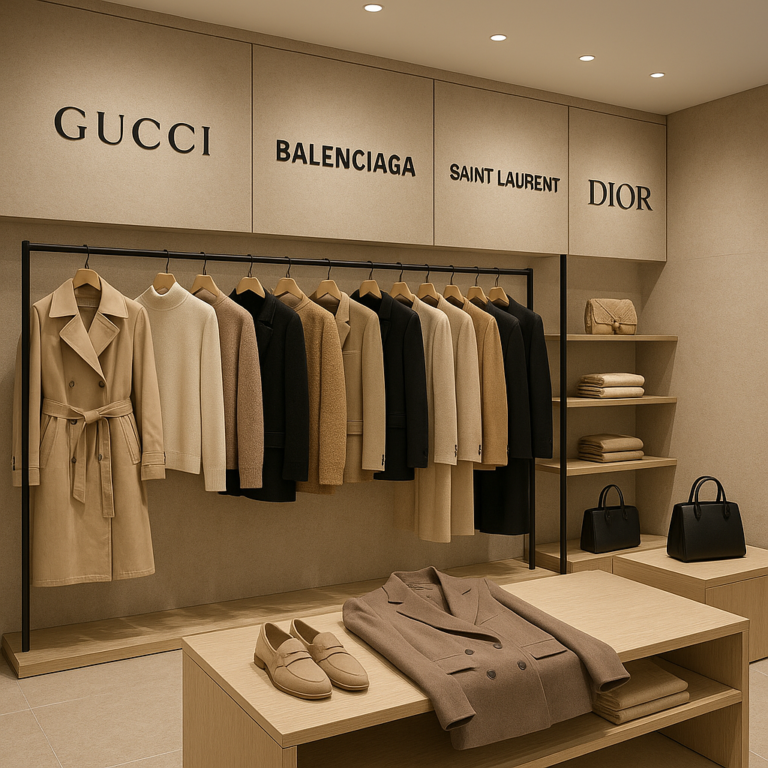
- LVMH (Louis Vuiton, Dior, Fendi): The undisputed king of luxury. They dominate the high-end market with heritage and exclusivity.
- Kering (Gucci, Saint Laurent, Balenciaga): A close second, known for pushing avant-garde trends.
- Hermès: The pinnacle of craftsmanship, with waitlists for bags that last years.
The Fast Fashion Kings
- Inditex (Zara, Massimo Duti): Masters of agile supply chains, turning runway trends into store shelves in weeks.
- H&M Group: A global giant with a massive footprint, though facing pressure to improve sustainability.
- SHEIN: The disruptor. Using data analytics to produce thousands of new styles daily, they have captured the Gen Z market with unbeatable prices.
The Sportswear Titans
- Nike: The global leader in athletic footwear and apparel. Their brand power is unmatched.
- Adidas: A strong contender, especially in the sneaker and lifestyle segments.
- Lulemon: The athleisure pioneer, dominating the yoga and wellness market.
The Challengers
- Deckers (UG, Hoka): Projected to surpass established giants in profits by 2024.
- New Balance & Vuori: Gaining massive traction with a focus on comfort and quality.
📉 Key Market Indicators: CAGR, Profit Margins, and Economic Drivers
To truly grasp the scale, we need to look at the financial health of the industry.
CAGR (Compound Annual Growth Rate)
- Global Apparel: ~2.81% (2025-2028).
- eCommerce Fashion: ~4.91% (2026-2030).
- Secondhand: ~15.07% (The fastest-growing segment).
Profit Margins
- Luxury: High margins (often 30-50%+), driven by brand equity.
- Fast Fashion: Low margins (5-10%), driven by volume.
- Sustainable Brands: Variable, often lower initially due to higher material costs, but gaining traction as consumers value ethics.
Economic Drivers
- GDP per Capita: As countries get richer, fashion spending increases.
- Internet Penetration: Directly correlates with e-commerce growth.
- Inflation: High inflation can dampen spending on non-essentials, but affordable fashion often sees a boost as consumers trade down.
🔄 Sustainability and Ethical Fashion: The New Market Reality
You can’t talk about the size of the fashion industry without addressing its shadow. The industry accounts for 10% of global carbon emissions and uses 93 billion cubic meters of water annually.
The Shift to Circular Fashion
- Recycling: Currently, only 1% of clothes are recycled annually. This is a massive opportunity for growth.
- Rental and Resale: Brands like Rent the Runway and platforms like ThredUp are changing how we consume.
- Transparency: Consumers demand to know who made their clothes. Brands are being held accountable for labor practices and environmental impact.
The Challenge
- Greenwashing: Many brands claim to be sustainable without backing it up.
- Cost: Sustainable materials are often more expensive, making it hard to compete with fast fashion prices.
Stylist Insight: We always advise our clients to buy less, but buy better. A $20 jacket that lasts 10 years is a better investment than five $40 jackets that fall apart in a year.
🤖 Technology Trends: AI, AR, and the Future of Retail
Technology is reshaping the fashion industry market from the inside out.
AI and Personalization
- 50% of fashion executives view generative AI as key for product discovery.
- 82% of customers want AI to reduce shopping research time.
- Application: AI algorithms recommend outfits based on your body type, style, and past purchases.
AR and Virtual Try-Ons
- Virtual Fitting Rooms: Apps that let you see how a dress looks on your body without trying it on.
- Digital Fashion: NFTs and virtual clothing for the metaverse are emerging markets.
Supply Chain Optimization
- Predictive Analytics: Using data to predict trends and manage inventory, reducing waste.
- 3D Printing: Custom-fit shoes and accessories printed on demand.
🚀 Emerging Markets: The Next Frontier for Fashion Growth
Where is the next trillion dollars coming from?
India
- Population: A massive, young population with rising disposable income.
- Digital Adoption: Rapid growth in e-commerce and mobile shopping.
- Local Brands: Indian designers are gaining global recognition, blending traditional craftsmanship with modern design.
Southeast Asia
- TikTok Shop: The platform has revolutionized fashion sales in the region.
- Cross-Border Trade: Easier access to global brands.
Africa
- Untapped Potential: While currently small, the youth population and urbanization suggest huge future growth.
- Local Design: African fashion is gaining a global following, celebrating cultural heritage.
📊 Methodology: How We Crunch the Numbers
At Clothing Brands™, we don’t just guess; we analyze. Our data comes from:
- Annual Filings: Publicly traded companies like Nike and LVMH.
- National Statistical Offices: Government data on retail sales and employment.
- Industry Reports: From Statista, UniformMarket, and McKinsey.
- Google/Alibaba Trends: Real-time search and sales data.
We cross-reference these sources to ensure accuracy, accounting for factors like inflation, currency fluctuations, and geopolitical events.
📞 Get in Touch with Us for Additional Information
Have more questions about how big the fashion industry market is or need a personal styling consultation?
- Email: [email protected]
- Social Media: Follow us on Instagram and TikTok for daily style tips.
- Consultation: Book a 1-on-1 session with our expert stylists to build your dream wardrobe.
🔒 About Your Privacy
We respect your privacy. Your data is safe with us. We do not sell your personal information to third parties. All data collected is used solely to improve your experience on our site and provide relevant fashion insights.
🏁 Conclusion

So, how big is the fashion industry market? It’s a $1.84 trillion behemoth that shows no signs of slowing down. From the luxury halls of Paris to the digital storefronts of SHEIN, the industry is evolving, adapting, and growing.
Key Takeaways:
- Growth is driven by digital adoption and emerging markets.
- Sustainability is no longer optional; it’s a necessity.
- The line between online and offline is blurring.
- Consumers are demanding transparency and value.
Whether you’re a brand owner looking to expand, a stylist seeking insights, or a consumer wanting to make informed choices, understanding the scale and dynamics of this market is crucial. The future of fashion is inclusive, sustainable, and tech-driven.
Final Thought: The industry isn’t just about clothes; it’s about identity. As we move forward, the brands that succeed will be those that can balance profit with purpose.
🔗 Recommended Links
Ready to explore the brands and products shaping this massive market? Check out our curated lists:
- 👉 Shop Sustainable Brands:
Patagonia: Patagonia Official Website | Amazon
Reformation: Reformation Official Website | Nordstrom - Affordable Fashion Finds:
Uniqlo: Uniqlo Official Website | Amazon
H&M: H&M Official Website | Amazon - Luxury Investment Pieces:
Coach: Coach Official Website | Amazon
Michael Kors: Michael Kors Official Website | Amazon - Books on Fashion Industry:
The Fashion Industry: A Global Perspective – Amazon
Loved Clothes Last by Orsola de Castro – Amazon
❓ FAQ

What is the projected growth of the global fashion market by 2030?
The global apparel market is projected to reach $2.8 trillion by 2029, with the eCommerce segment expected to hit $1.16 trillion by 2030. The industry is growing at a CAGR of roughly 2.81% for the broader market and 4.91% for the digital sector. This growth is fueled by rising disposable incomes in emerging markets and the increasing adoption of online shopping.
Read more about “💰 How Big is the US Women’s Clothing Market? (2026)”
Which clothing brands are leading the sustainable fashion industry?
Brands like Patagonia, Eileen Fisher, and Reformation are pioneers in sustainable fashion. Patagonia is renowned for its “Worn Wear” program and commitment to environmental activism. Eileen Fisher focuses on circularity and organic materials. Reformation is famous for its transparent sustainability reports and eco-friendly production methods. Additionally, Allbirds and Veja are leading the way in sustainable footwear.
Read more about “👑 150+ Top High-End Clothing Brands: The Ultimate 2026 Guide”
How much do consumers spend annually on designer clothing versus fast fashion?
While specific numbers vary by region, the average US household spends $1,945 per year on apparel. A significant portion of this goes to fast fashion due to its affordability and trend-driven nature. However, the luxury segment is also growing, with high-net-worth individuals spending thousands on designer pieces. The secondhand market is bridging the gap, allowing consumers to access designer items at lower prices.
What are the biggest trends driving the current fashion industry market size?
- Sustainability: Consumers are demanding eco-friendly and ethical products.
- Digitalization: The rise of e-commerce, AI, and AR is transforming how we shop.
- Inclusivity: Brands are expanding size ranges and celebrating diversity.
- Resale and Rental: The circular economy is gaining traction, with secondhand sales growing rapidly.
- Athleisure: The blending of athletic and casual wear continues to dominate.
How does the “Muse vs. Customer” concept impact market size?
As discussed in the featured video, understanding the difference between a muse (inspiration) and a customer (buyer) is crucial. Brands that design for the customer’s needs (comfort, fit, price) while drawing inspiration from muses tend to have higher sales volumes. This customer-centric approach drives market size by ensuring products are relevant and desirable.
Read more about “🌍 Global Womenswear Market Size: The $1T Future (2026)”
📚 Reference Links
- UniformMarket: Global Apparel Industry Statistics (2025)
- Statista: Fashion Industry Outlook
- McKinsey & Company: The State of Fashion 2024
- Bureau of Labor Statistics: Consumer Expenditure Surveys
- Latico Leathers: Is the Fashion Industry Growing? (Note: Content limited, see summary above)
- Featured Video: Understanding Your Customer in the Fashion Industry